For the second half of our Jeju trip, I wanted the kids to sleep somewhere they would remember, not just another hotel room. So I booked a Seongeup Folk Village stay, two nights inside a real thatched-roof hanok in one of Jeju’s preserved old villages. The idea was simple. Let them wake up inside Korean history for a couple of days.
Our two kids are nine and ten, well past the age of being impressed by a fancy lobby. A stone-walled house with a grass courtyard, though, turned out to be exactly the sort of different they responded to. So let me take you through the Swigopang hanok, what the old house is actually like to live in, and why the courtyard stole the show.
What a Seongeup Folk Village Stay Actually Means
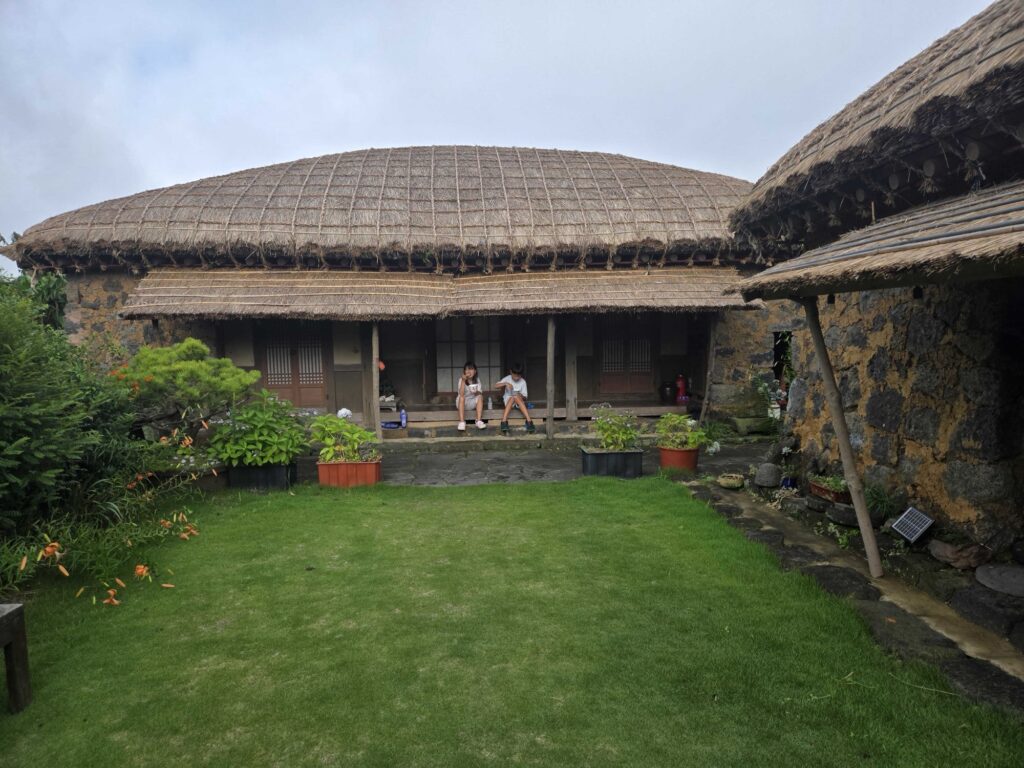
Seongeup is a preserved folk village on the eastern side of Jeju, a cluster of traditional homes with black basalt walls and thatched roofs. People still live here, and a handful of the old houses take overnight guests. So a stay puts you inside a working piece of heritage, not a museum behind a rope.
A House Inside a Living Village
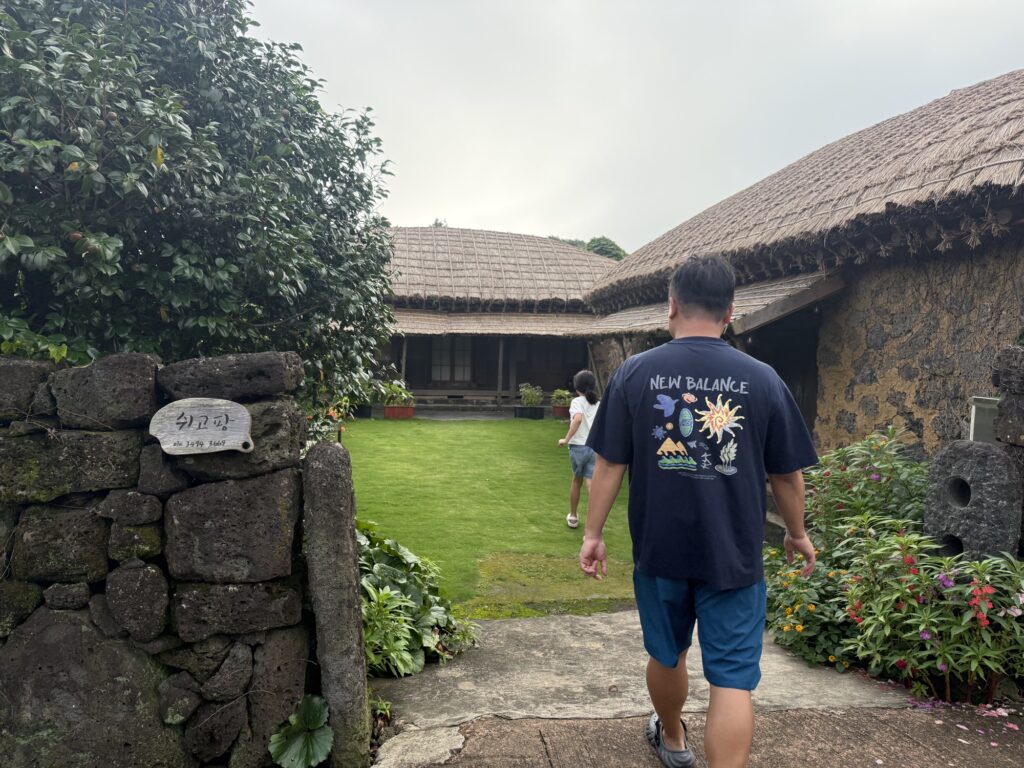
Our house sat behind its own low stone wall, with a small sign at the gate and a green courtyard in the middle. From the outside it looked centuries old, all rough stone and dense straw thatch. That contrast, ancient shell and comfortable inside, is the whole appeal of a Seongeup Folk Village stay, and it landed the moment we walked through the gate.
The thatched roof is the signature. Jeju homes were built low and round to survive the island wind, and this one hugged the ground the same way. Thick straw, rounded eaves, stone walls holding it all down. It is a design shaped by centuries of storms. The kids kept touching the straw, amazed that people once built and rebuilt these roofs by hand every few years.
Those black stone walls are pure Jeju too, stacked from the volcanic rock that is everywhere on the island. They ring the yard and the house, giving the whole place a solid, rooted feel. We had seen these walls all over Jeju by then, but sleeping inside a house made of them made the island’s character feel personal rather than just scenic.
Old on the Outside, Remodeled Within
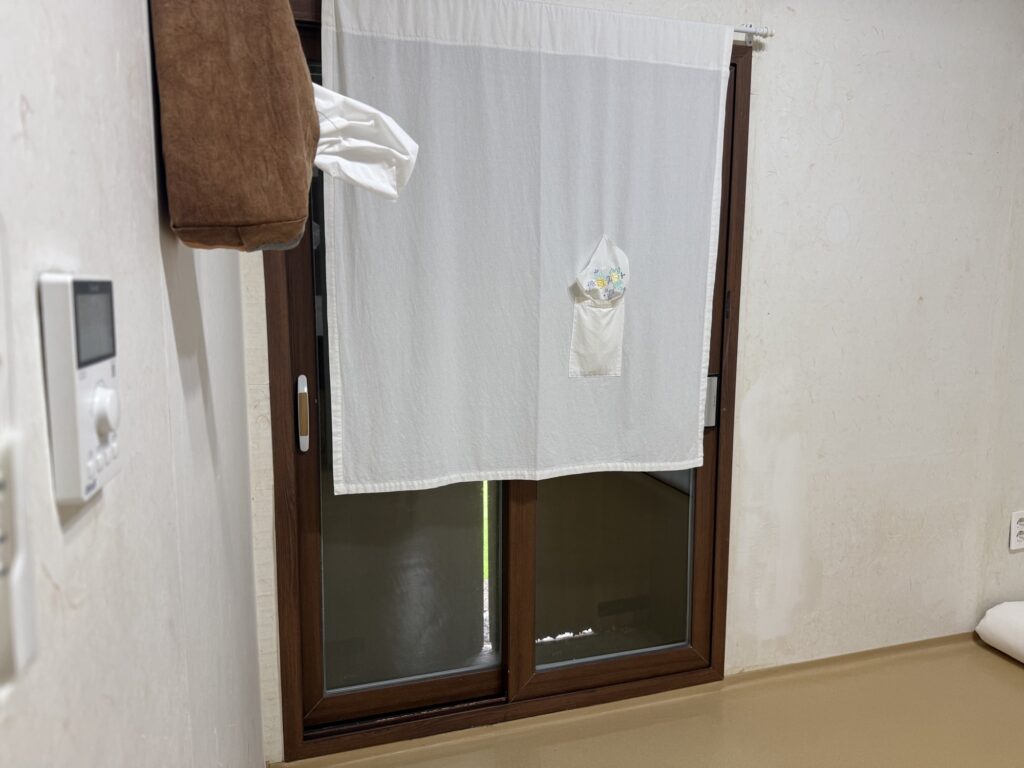
Here is the part that surprised us most. Step through the low doorway and the inside is clean, modern, and comfortable. The rooms had smooth plastered walls, warm ondol floors, and none of the draft or grime you might fear from a very old house.
Old Beams Above, a Warm Floor Below
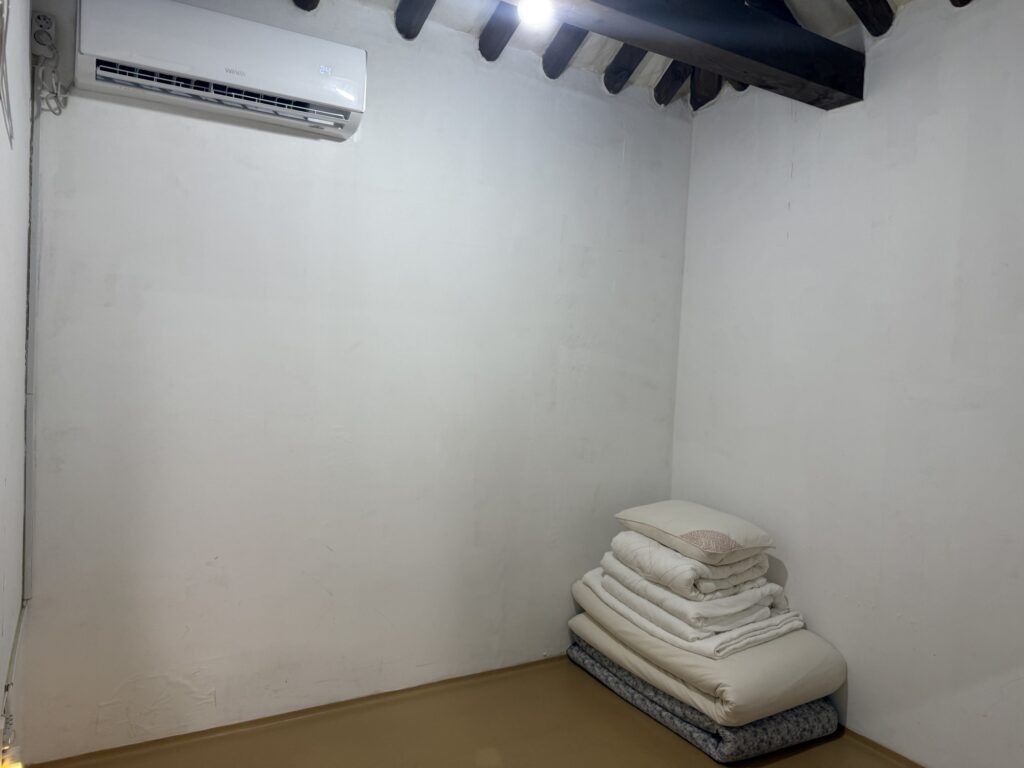
The bedroom kept its old bones on show. Dark wooden beams crossed the white ceiling, which the kids decided looked like a pirate ship. We slept on floor bedding in the Korean style, thick mats and quilts stacked in the corner by day. For kids, sleeping on the floor together felt like a nightly indoor campout, and nobody missed a Western bed at all.
The ondol floor deserves a mention too. It is the traditional Korean underfloor heating, and it made the room cozy at night. Even in summer, a mountain village can cool down after dark. A warm floor to sleep on took the edge off. The kids fought over who got the warmest spot, which is about the highest praise a floor can get.
Sleeping all in one room turned out to be a highlight, not a compromise. Back home the kids have their own beds and their own rooms. Here we laid the mats out together, and bedtime became a shared, giggly event rather than a scattering to separate doors. They whispered and laughed until they dropped off, and there was something sweet about all four of us under one low roof.
For anyone worried about floor sleeping, give it an honest try before you judge it. The mats are thick and the ondol keeps you warm from below. I slept better than I expected, and the kids did not even notice the difference. It is genuinely comfortable once you commit, and it is part of the experience you came for.
A Full Kitchen, Which Changed the Trip
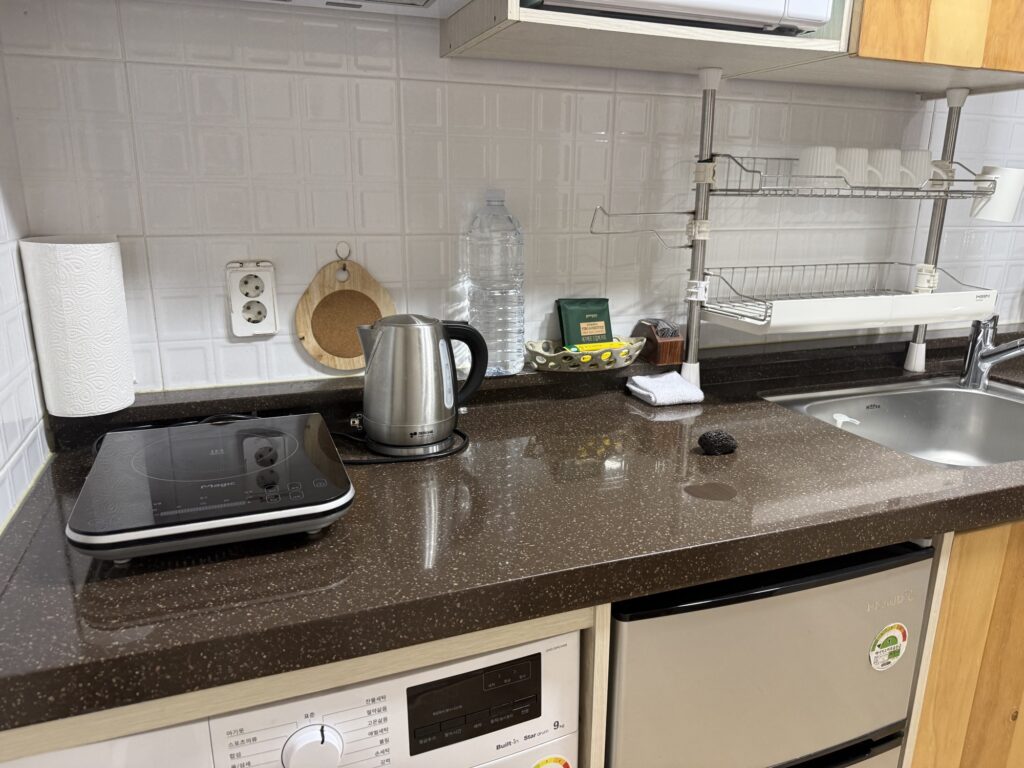
The kitchen sealed it for me. Tucked into the old house was a full little kitchenette, with an induction hob, a kettle, a microwave, a sink, and even a washing machine and a small fridge.
Bathroom and Everyday Comforts
The bathroom followed the same idea, old house outside, modern plumbing within. Hot water, a proper shower, everything you actually need. Nothing about the stay felt like roughing it. If you have pictured a hanok night as camping in a museum, put that fear aside, because the comforts are all here.
Arriving and Settling In
Check-in was simple and warm. The host walked us through the house, showed us how the heating and the kitchen worked, and left us to settle. There was no big front desk or formality, just a handover of keys and a few friendly words. That personal touch set the tone. From the first minute it felt less like booking a room and more like borrowing someone’s home for a couple of nights.
The kids ran a lap of the whole place before we had even unpacked. Sliding doors to test, a wooden porch to sit on, low ceilings to duck under. They claimed corners of the room within minutes, deciding whose spot was whose. A house that a child wants to explore on arrival is a good sign, and this one had them hooked before the bags were down.
That may sound dull. On a two-week family trip, it is gold. We rinsed swimsuits, boiled water for tea, and kept snacks and drinks cold. A mid-trip load of laundry is a small thing that quietly keeps a long journey with kids from unraveling. A Seongeup Folk Village stay that comes with a washing machine is a rare and welcome combination.
It also let us eat in when we wanted. Some nights the kids were too tired for a restaurant. On those nights, a simple meal in our own kitchen beat dragging everyone out. That flexibility is worth a lot when you are traveling with children who run out of steam without warning.
The Courtyard That Won the Kids Over
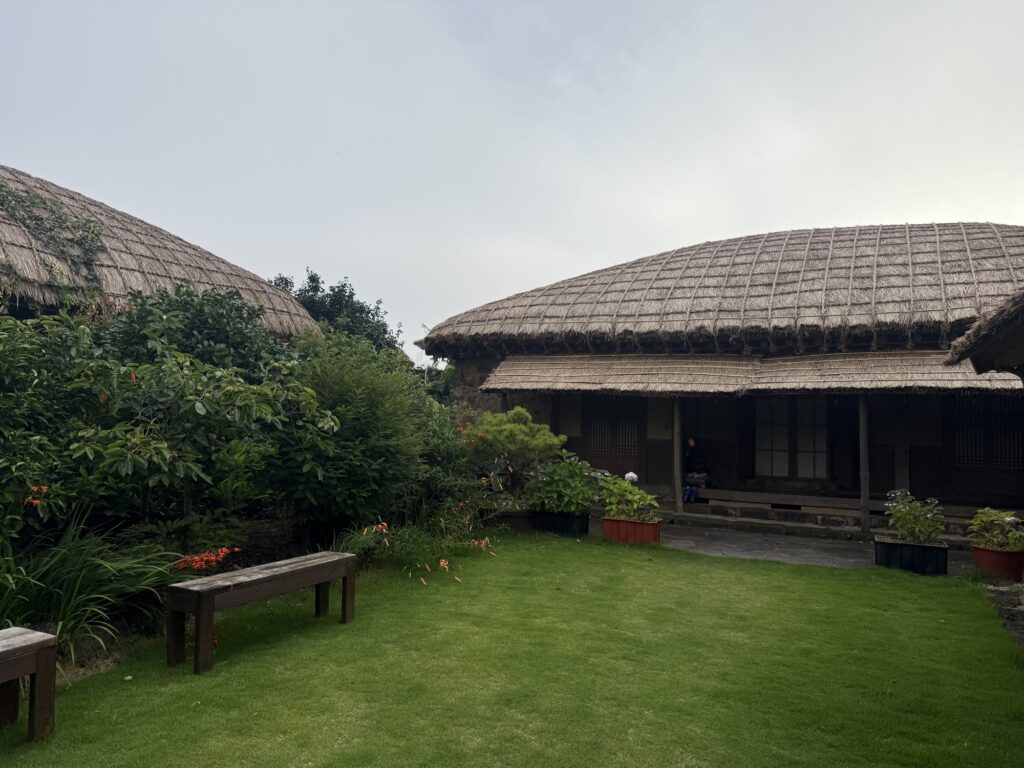
If the house was the surprise, the courtyard was the star. Our hanok wrapped around a private square of green grass, walled off from the lane outside. The moment we arrived, the kids dropped their bags and just ran laps around it.
A hotel gives you a room. This gave us an outdoor space that was entirely ours. It was safe and enclosed, with grass to roll on and a bench to sit on. For two nights, the kids had somewhere to burn energy the second we stepped outside the door. No lobby, no shared corridor, no shushing. Just our own patch of Jeju to use however we liked.
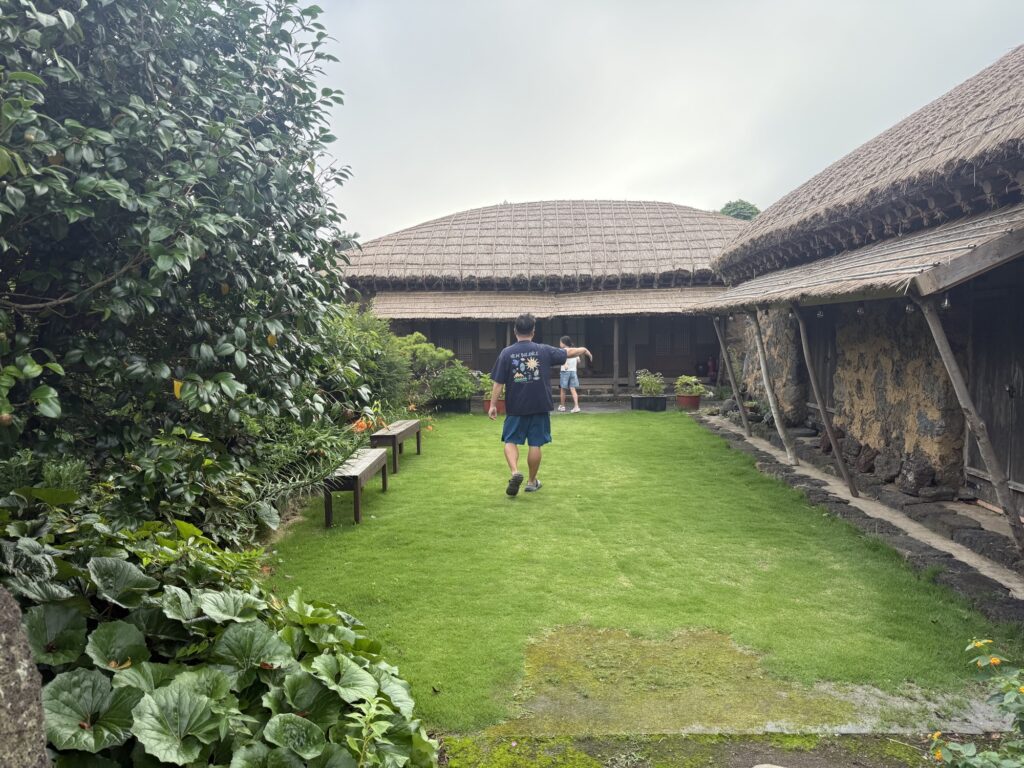
This is the thing hotels cannot give a family. Kids need room to move, and travel days are full of sitting still. A car, a museum, a restaurant, a queue. By evening they are bursting. Having a private yard meant they could unload all that energy the moment we got back, and they slept better for it too.
Breakfast in the Yard, Every Morning
The best part of the whole stay was breakfast. Both mornings we carried food out and ate in the courtyard, under a bright sky, with the thatched roof behind us. The kids sat on the porch, we sat on the bench, and the day started slow and quiet.
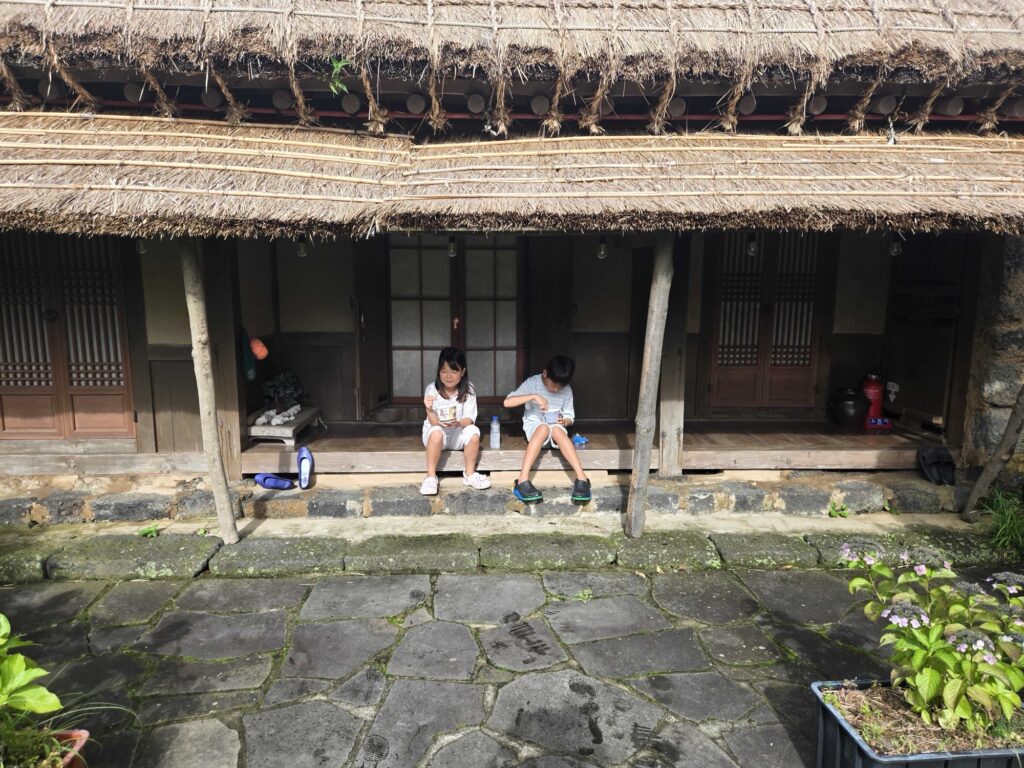
There is something about eating outdoors in a space that belongs only to you. No buffet queue. No crowded dining room. Just family and fresh air. Those slow courtyard breakfasts are the picture I keep coming back to from this whole trip. They cost nothing extra, and they were worth more than any hotel breakfast we paid for elsewhere.
We kept it simple. Bread, fruit, eggs from the little fridge, tea from the kettle. Nothing fancy, and it did not need to be. The setting did all the work. A plain breakfast tastes different when you eat it on a wooden porch under a thatched roof, with dew still on the grass.
The weather helped. Both mornings were bright and mild, and the grass dried fast in the sun. We were lucky, and I know Jeju can turn grey and wet without warning. Even so, the porch is covered, so a rainy morning would just mean coffee under the eaves while the yard glistened. Either way, you win.
Coffee, Grass, and No Rush
My wife and I took turns with the coffee while the kids invented games on the grass. One morning they built a whole imaginary shop out of leaves and pebbles on the bench. Watching them play like that, unhurried and screen-free, was worth more to me than any tourist attraction we paid to enter.
That is the quiet argument for a stay like this. So much of a family trip is scheduled, ticketed, and rushed from one sight to the next. A private courtyard gives you unstructured time, the kind kids actually remember. No queue, no entry fee, no closing time. Just a patch of green and a few unhurried hours to fill however you like.
We are usually campers back home, and this scratched the same itch with none of the hassle. The outdoor space and the slow mornings had the feel of camping, but with a real bed roll, a hot shower, and a kitchen. For families who like the idea of camping but not the gear and the mud, a hanok stay like this is a brilliant middle ground.
Living Inside the Village
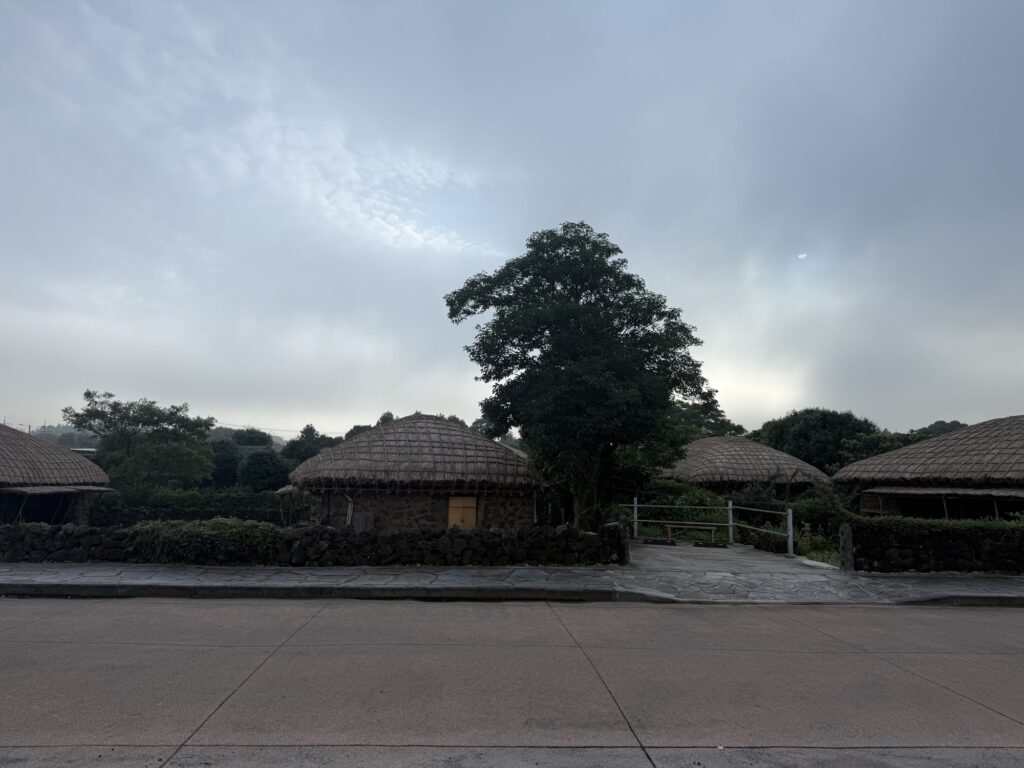
Because the house sits inside Seongeup Folk Village, stepping out the gate meant stepping straight into history. Stone-walled lanes, thatched roofs in every direction, and enough to look at that an evening stroll became its own activity.
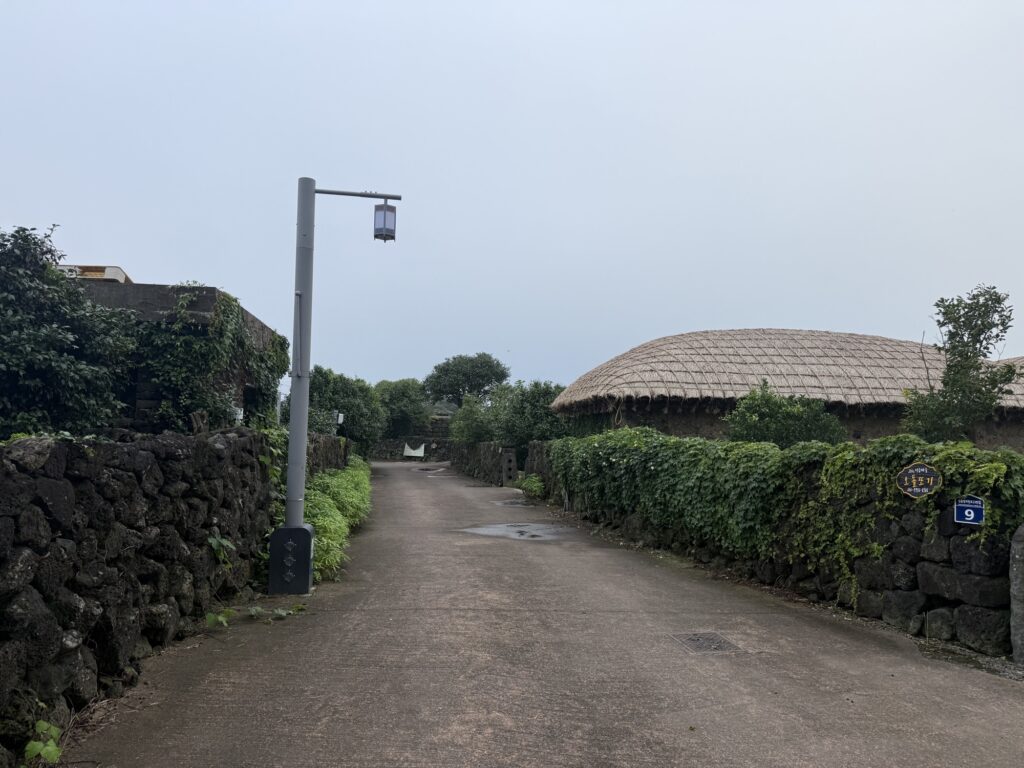
The village has restaurants, small shops, and cultural spots within easy walking distance. So we never had to drive far for dinner. In the evenings we wandered the lanes as the light dropped. The kids peered over walls into other courtyards. By day the village draws visitors. Staying overnight let us have the quiet early mornings and late evenings mostly to ourselves.
That shift is the hidden perk of sleeping here. Most people see Seongeup as a two-hour day trip, in a crowd, in full sun. We got the version without the crowd. Early morning light on wet thatch, an empty lane, birdsong instead of tour groups. Staying overnight turns a busy attraction into a calm little world, and the kids felt that calm too.
The Village After Dark
Walking the lanes at night felt a little like time travel. No cars, no neon, just stone walls and the odd warm window. We talked about how families lived here long ago, hauling water and mending roofs. The kids asked good questions, the kind that only come when history is standing right in front of them instead of sitting in a book.
By day, the village hums with visitors and cultural demonstrations, so there is plenty to see without going far. You can wander into old homesteads, watch traditional crafts, and learn how Jeju families lived off this land. Staying overnight means you get the best of it in the quiet hours, then the buzz of the day if you want it, all a few steps from your door.
It rained lightly one afternoon, and even that was lovely from inside the hanok. The sound on the thatch is soft and steady, nothing like rain on a metal roof. We sat on the porch under the eaves, watching it fall on the courtyard grass, and nobody minded being stuck inside for a while.
That is the quiet magic of the place, that even a grey, wet afternoon became a good memory. There was nowhere we needed to be and nothing we needed to do. Just the four of us, a warm floor, and the rain on the roof. Some of the best moments of the whole trip were the ones where we simply stayed put here.
Hanok Stay vs Hotel for a Family
We did both on this trip, a modern hotel and this hanok, so the contrast was fresh. The hotel half was Hotel Aircity, which we have reviewed separately. It was easy and comfortable. Clean beds, a lift, a front desk. It did the job.
But the kids barely remember the hotel. They remember the courtyard, the pirate beams, and sleeping on the floor together. A hotel is a place you pass through. A Seongeup Folk Village stay is a place that becomes part of the trip itself. For a family, that difference is the whole point of choosing one over the other.
There are trade-offs, to be fair. You give up a little convenience and a proper bed. You gain space, character, and a memory the kids will actually keep. On a long trip I would happily split the difference, a few nights of hotel ease and a few nights of something like this.
- 📍 Location: Inside Seongeup Folk Village, eastern Jeju
- 🛏️ Sleeps: A family of four comfortably, floor bedding
- 🎯 Best Age Range: Any age; toddlers to teens
- ⭐ Overall: 4.6 / 5, the courtyard makes it
What to Know Before You Book
A hanok stay is not a hotel, and going in with the right expectations makes all the difference. The bedding is on the floor, Korean style, which most kids love and some adults need a night to adjust to. Rooms are cozy rather than large, and the charm comes from the setting, not from square footage or a minibar.
What It’s Really Like to Stay
Practically, the kitchen and washing machine made this feel more like a home than a room. That suited a longer trip perfectly. Parking was simple near the village. The setting means you are close to food and sights without needing to drive each time. The peak is a short drive away too, so a night here pairs perfectly with a morning climb — we wrote up what the climb up Seongsan Ilchulbong is really like for kids if that is on your list. For families who want their Jeju base to be an experience in itself, rather than just somewhere to sleep, this style of stay is hard to beat.
One honest note on comfort. Old houses can be warm in summer, so check that your room has air conditioning, as ours thankfully did. The floor bedding is comfortable once you commit to it, though a soft mattress it is not. Go in expecting charm and character over hotel polish, and a Seongeup Folk Village stay will delight you rather than surprise you.
I would also say it suits slightly older kids best, though any age can enjoy it. Ours were the perfect age to appreciate the history and still treat the yard as a playground. A crawling toddler would be fine too, just watch the stone steps and the low doorways, which are built for shorter ancestors than us.
Packing, Cost, and Who It Suits
On packing, keep it simple. The house has what you need, so you do not have to haul much beyond clothes and toiletries. I would bring a nightlight for kids not used to sleeping on the floor in an unfamiliar room, and slippers for the cool floors in the morning. Beyond that, travel light and let the place provide, which is part of the ease of staying somewhere this well set up.
A quick word on cost. A hanok stay like this is not the cheapest bed on the island, but it is far from the priciest either. For what you get, a private house, a courtyard, a kitchen, and a genuine experience, the value is strong. We would happily pay it again, and I suspect most families would feel the same once they spend a night here.
If I am honest, the only downside is that one or two nights is not enough. By the time we had fully settled into the rhythm of the place, the slow mornings and lazy evenings, it was time to pack up. Next visit, I would book three nights and actually let us unwind into it properly.
The Case for a Hanok Night
The verdict is short. Book the hanok.
If you only do one non-hotel night on Jeju, make it a hanok in a village like this. The history, the courtyard, and the slow mornings add up to something a chain simply cannot sell you. It costs a little comfort and gives back a lot of memory, which is a trade I will make every time on a family trip.
On our last morning, our younger one asked if we could live in a thatched house back home in Hanam. I said probably not, but the fact that she wanted to told me everything about how the stay landed.