The 2026 Taean International Horticultural Therapy Expo (2026 태안국제원예치유박람회) ran from April 25 to May 24, 2026, next to Kkotji Beach on Anmyeondo in Taean. We had not planned to go. On May 4, after a morning packing up from our Children’s Day camping trip, lunch on Anmyeondo and a stop at Kkotji Beach, we saw the banners and pulled in at about 4:25 p.m. with our two elementary-school kids. This review of the Taean Horticultural Therapy Expo covers what we paid, what we saw in our short visit, and what we would do differently.
- Event: 2026 Taean International Horticultural Therapy Expo (2026 태안국제원예치유박람회)
- Dates: April 25 to May 24, 2026, 09:00 to 18:00
- Venue: 400 Kkotjihaean-ro, Anmyeon-eup, Taean-gun, Chungcheongnam-do (Naver Map)
- Visited: Monday, May 4, 2026, about 4:25 to 6 p.m.
- Tickets: 15,000 won per adult, 9,000 won per child; 48,000 won for our family of four
- Age fit: our two elementary-school kids; lots of photo zones and hands-on activities
- Info checked: September 2026 (the expo has ended)
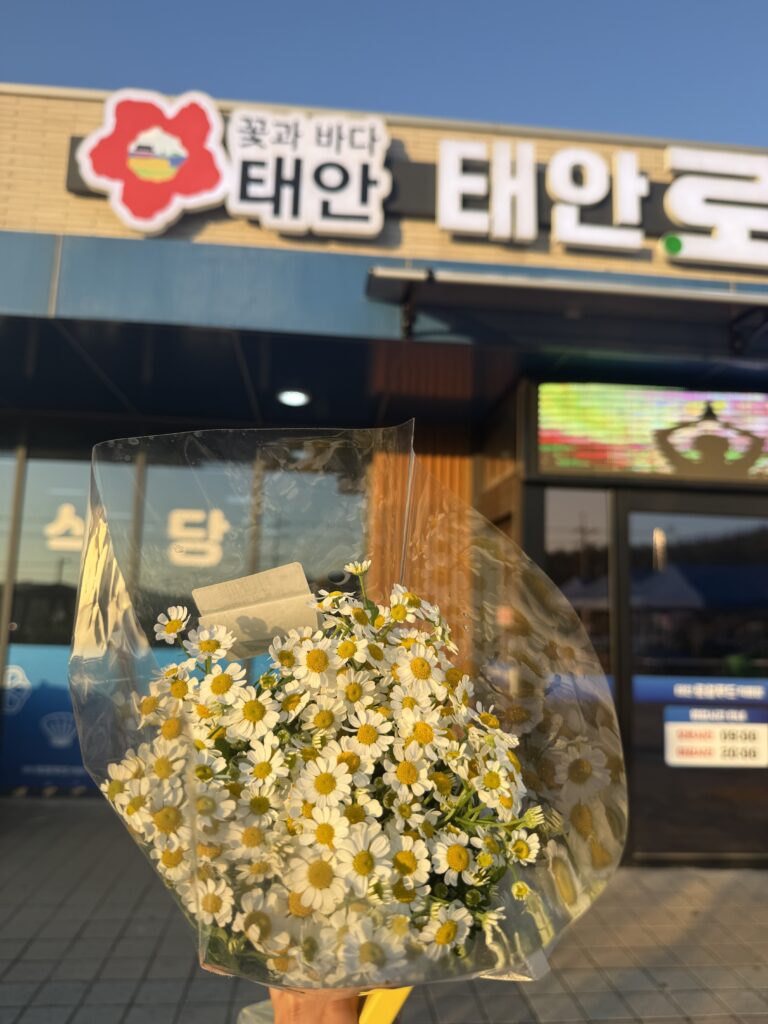
A spontaneous stop after Kkotji Beach
The expo grounds sit right next to Kkotji Beach, and there were large banners along the road with flowers and cartoon characters. Our daughter spotted the Teenieping characters on the banners, and that decided it. We paid 48,000 won for the four of us, 15,000 won per adult and 9,000 won per child, and went in with less than two hours before closing.
The expo was organized around healing through plants and gardening, with themed halls on horticultural healing, green healing, future innovation, industry exchange, international exchange and local products, along with outdoor flower gardens and photo zones. There was far more than we could see in the time we had.
The Sacred Garden
Our best stop was the Sacred Garden (신들의 치유정원), a dark indoor pavilion filled with glowing blue paper flowers hanging from the ceiling, with light and projection all around. It felt more like an art installation than a flower show. Both kids went quiet walking through it, and our daughter kept reaching out toward the flowers.
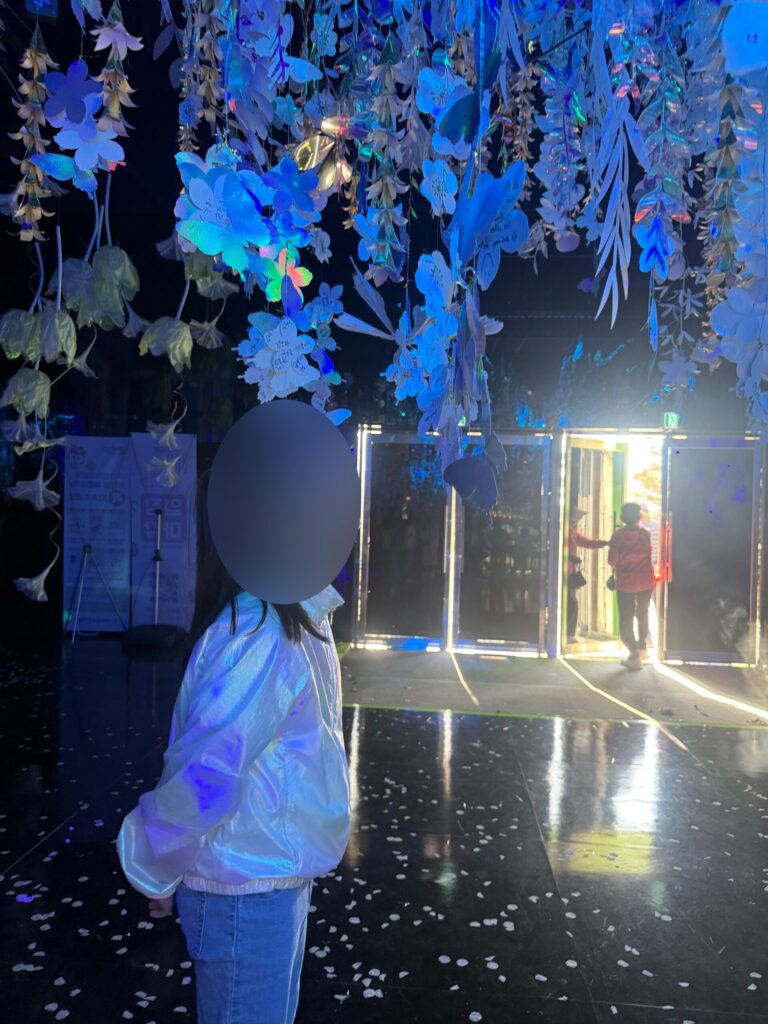
In the same area, visitors could write a wish on a paper flower and hang it up. Our kids wrote one for the family: that we all stay healthy and happy.
Teenieping and the giant pink rabbit
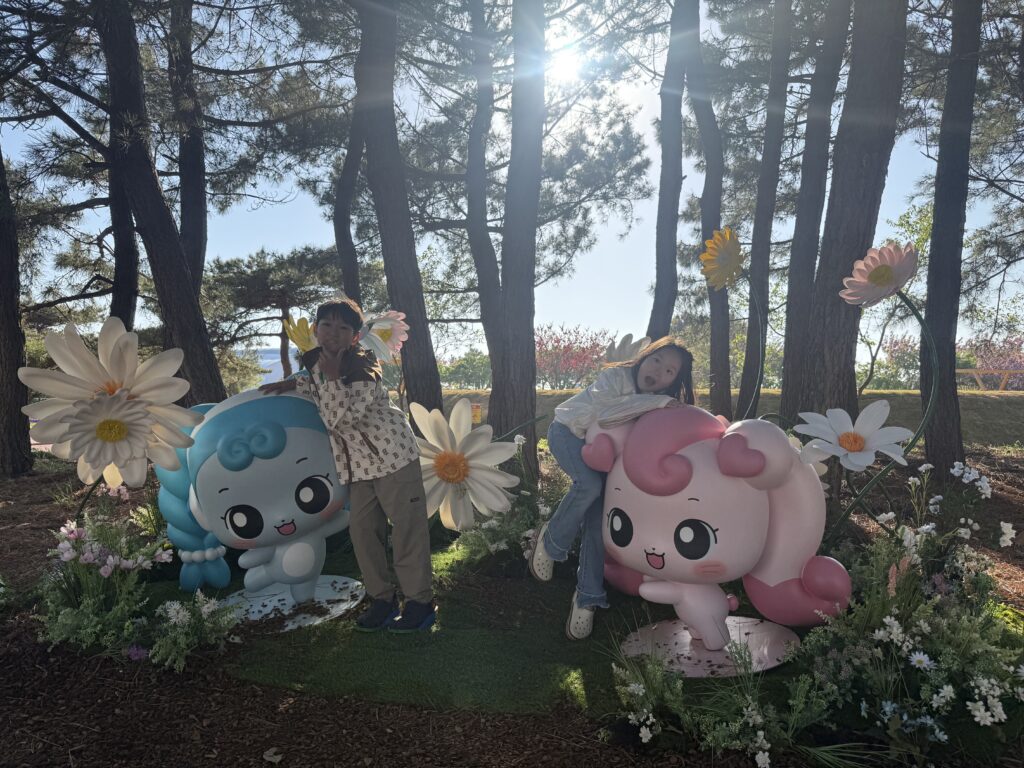
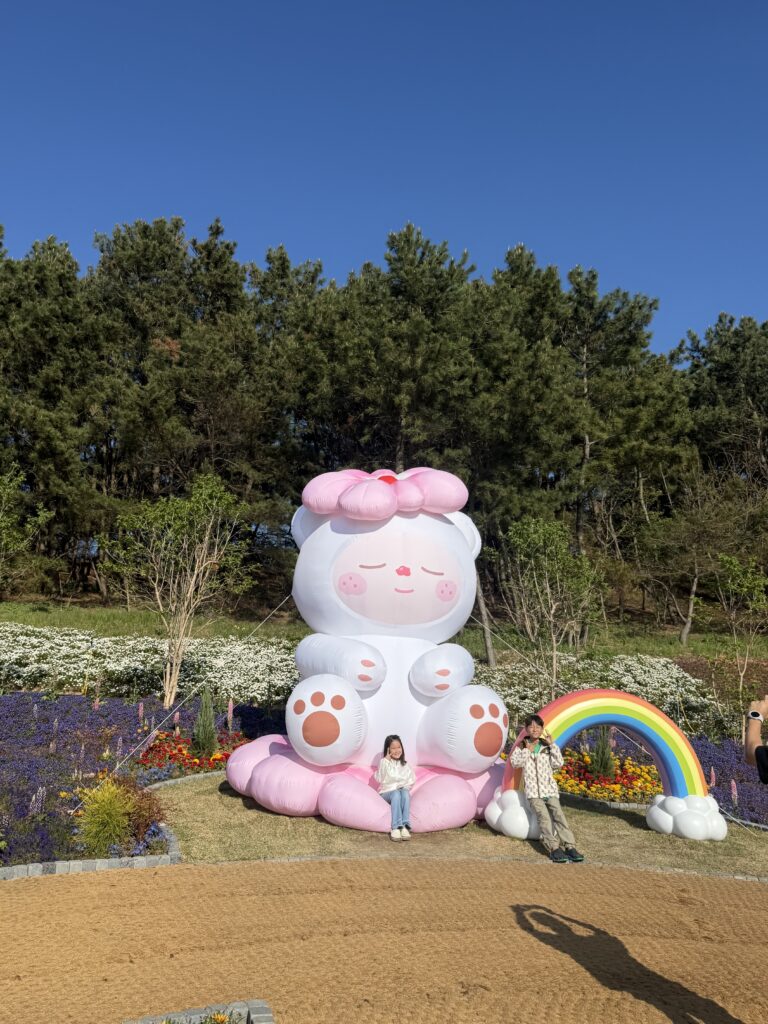
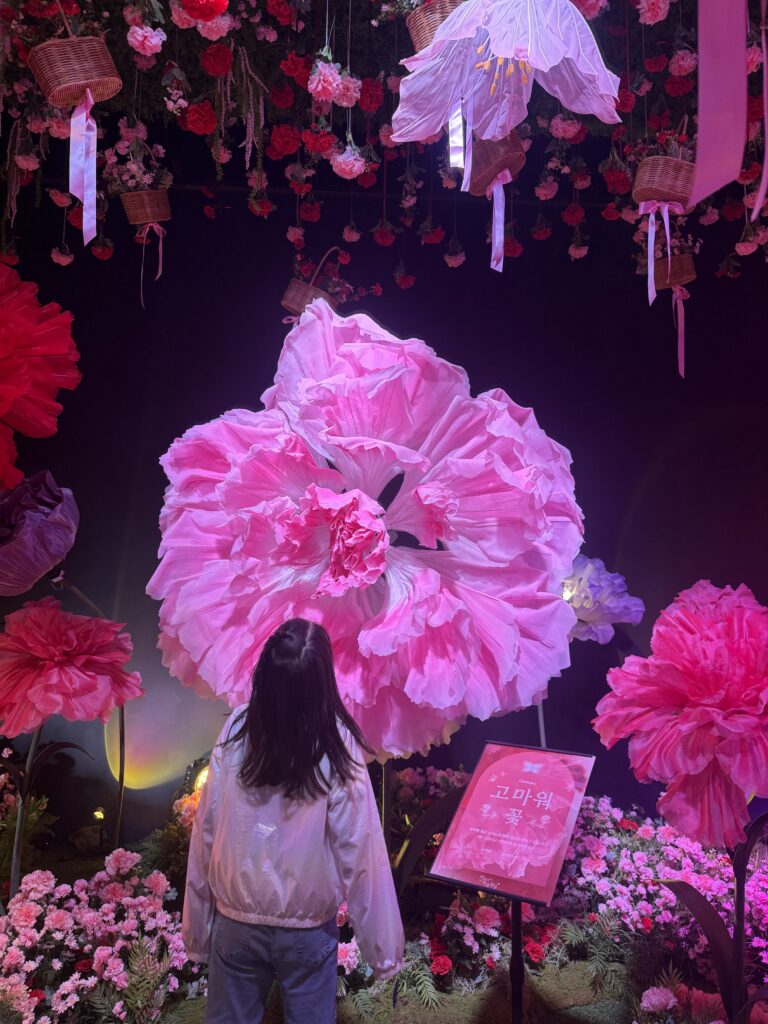
Teenieping (티니핑) is the character series that most Korean elementary-school girls know, and the expo had Teenieping figures set among giant flowers. Our daughter posed at every one. Our son was less interested, until we reached a huge pink rabbit next to a rainbow. His verdict was that it was big for no reason, which somehow made it his favorite.
The AI butterfly and talking to flowers
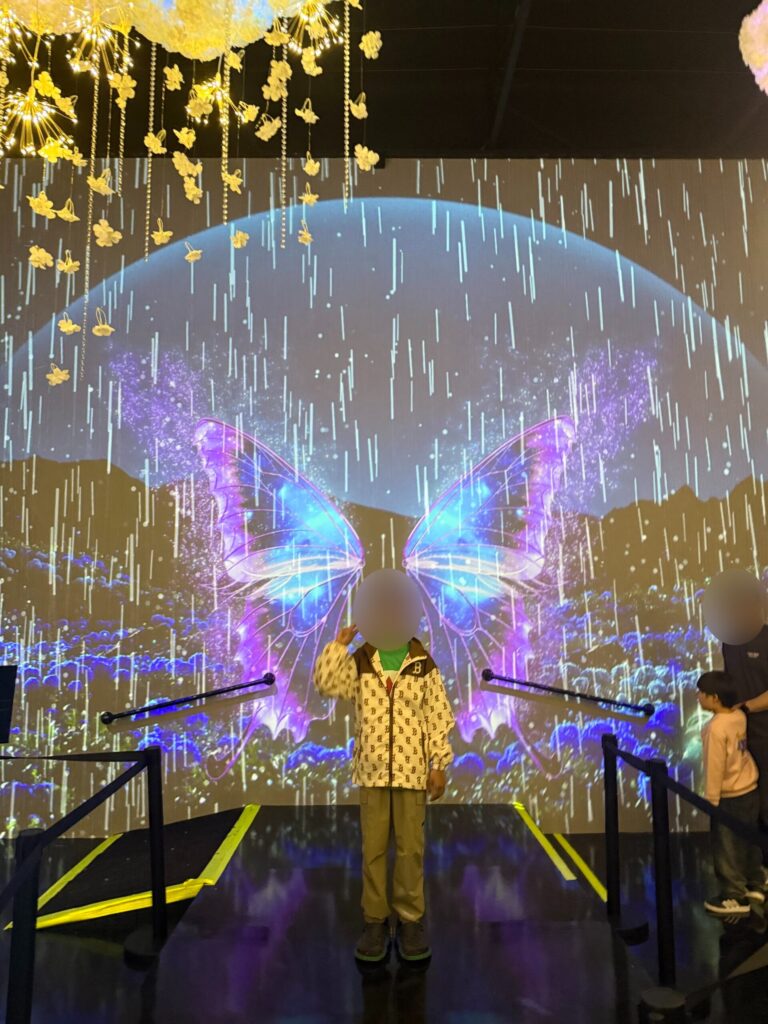
In one hall, a large screen showed a digital butterfly whose wings moved as you stood in front of it. Our son stood on the mark and tried different movements to make it react. In another corner, you could speak to digital flowers and they reacted, and he spent a good while trying different phrases on them.
Planting ginseng to take home
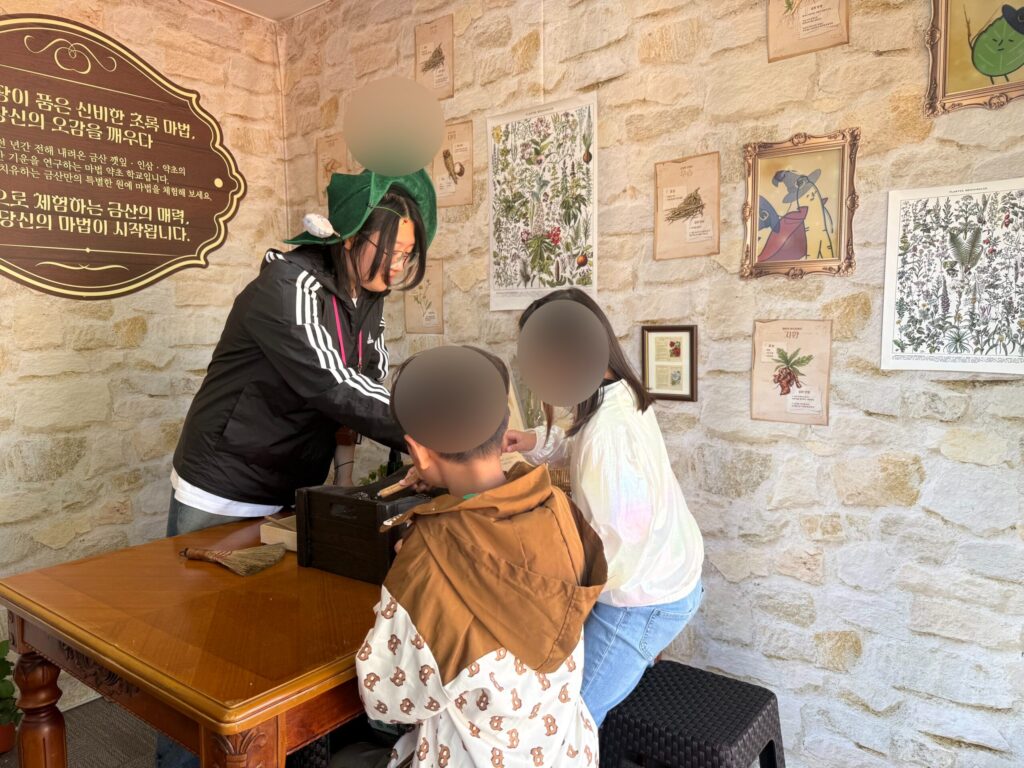
One of the free activities was planting a small ginseng sprout in a pot, with staff helping the kids step by step. Both kids planted one and carried their pots out of the expo, and we brought them home and put them on the window. For kids, taking something home that they made themselves was a highlight.
Flower walls and snacks
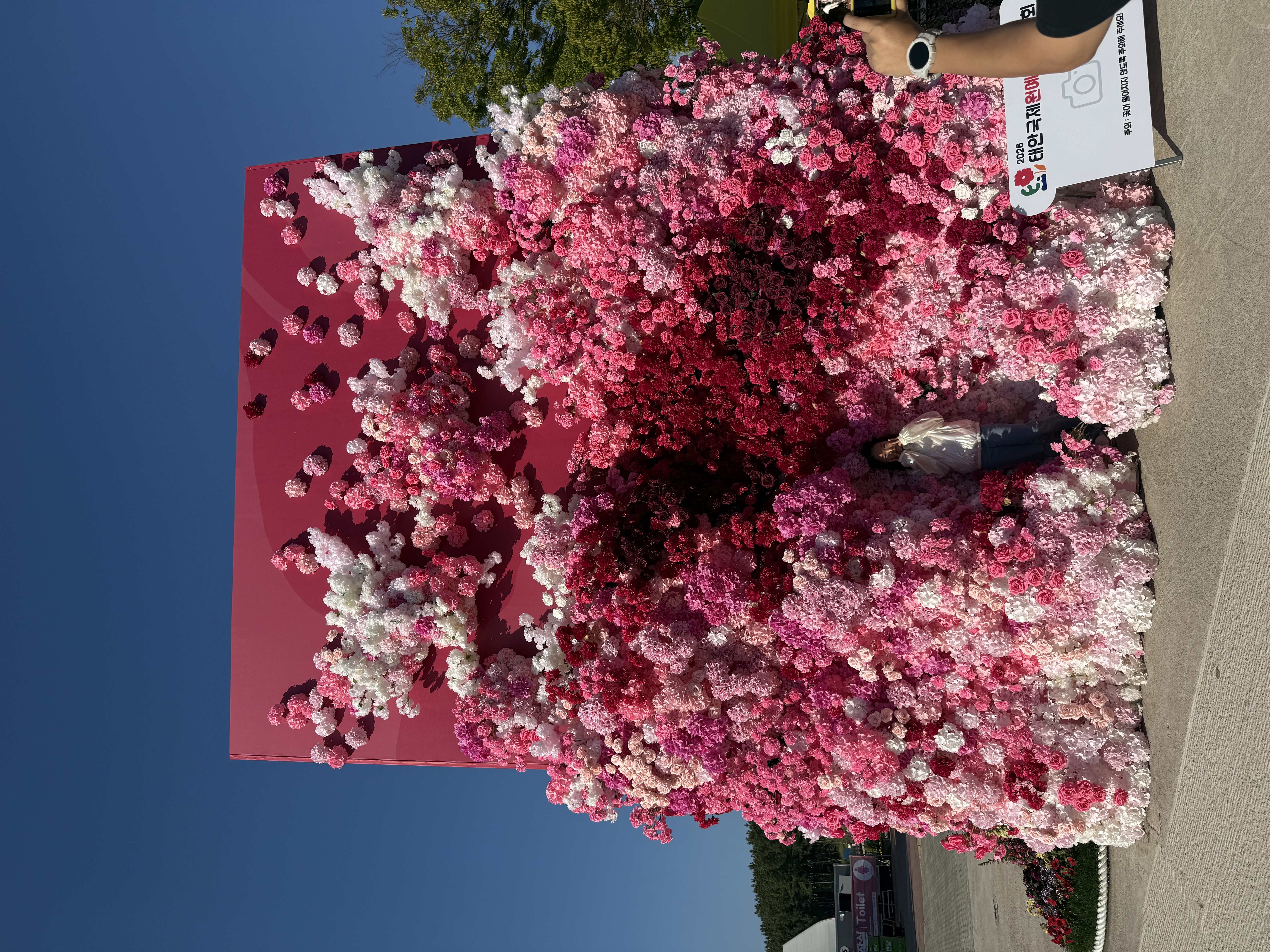
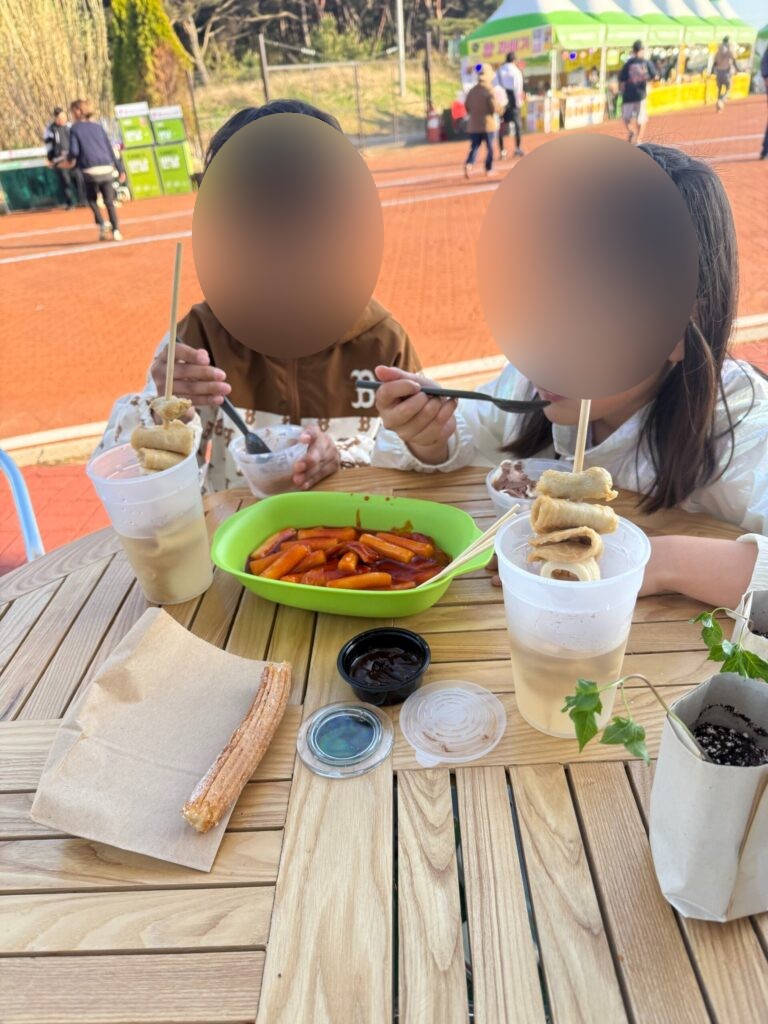
Outside, there were big flower installations and flower walls set up as photo zones. Near the paths there were food tents selling Korean festival snacks, and we had tteokbokki and fish cake skewers at a table outside. It was snack food rather than a meal, which was fine for us after our lunch on Anmyeondo.
What we would do differently
We arrived too late. With under two hours before the 6 p.m. close, we saw the Sacred Garden, the character zones, the AI butterfly, the ginseng planting and some of the outdoor displays, but walked past several halls we never went into. If you go to an event like this, plan for at least half a day. The price made more sense for a full visit than for our short one.
Would it work for non-Korean speakers?
Most of what our kids enjoyed did not need any Korean. The Sacred Garden is all light and color, the AI butterfly reacts to movement, the character zones are photo spots, and the ginseng planting was a follow-the-staff activity. The talking flowers were the one exhibit where speaking Korean helped. Signs for tickets, restrooms and food were easy to handle with a translation app.
Our visit fell on the Children’s Day long weekend, and the grounds were busy with families even late in the afternoon. If a similar expo runs again, a weekday morning would give you more time and fewer people at the popular halls.
Our Anmyeondo day
Our May 4 went like this: packing up at Naepo Camping Square in the morning, a grilled clam lunch at Pungnyeon Hwesenta on Anmyeondo, an afternoon at Kkotji Beach, then the expo until closing. It was a full day, and the expo was the part we did not plan.
Korean words that help
- 원예치유 (wonye chiyu): horticultural therapy
- 박람회 (bangnamhoe): expo
- 입장권 (ipjangkkwon): admission ticket
- 인삼 (insam): ginseng
- 체험 (cheheom): hands-on activity
- 떡볶이 (tteokbokki): spicy rice cakes
Questions parents ask
Is the Taean Horticultural Therapy Expo still running?
No. The 2026 expo ran from April 25 to May 24, 2026. Check Taean County’s announcements for any future events at the site.
Was it worth 48,000 won for a family?
For a full visit, likely yes. For our visit of under two hours, it felt expensive, even though the kids enjoyed it.
Our verdict
The Sacred Garden, the AI butterfly and the ginseng pots made the visit for our kids. The mistake was ours: arriving at 4:25 p.m. meant paying full price for less than two hours. Our rating: 3.8 / 5.