We left Naepo Camping Square at 10 a.m. on the morning of our last day, made a long lunch stop at Pungnyeon Hwesenta on Anmyeondo for grilled clams, and were finally heading north toward home when the kids decided we weren’t done yet. The 9-year-old asked if we could see the sea before we drove back. We checked the map. Kkotji Beach with kids sat about an hour from where we were, and our drive home would pass through Anmyeondo anyway. So we made the detour.
The detour turned into a two-hour beach stop. The kids ran in sand. They collected shells. They jumped shadows in the late afternoon light. By the time we packed up, even my wife had forgiven the 5-hour traffic jam from three days earlier. Kkotji Beach (꽃지해수욕장) ended up being the easiest, most relaxing part of the entire long weekend.
Why We Stopped at Kkotji Beach on the Drive Home
The drive from Anmyeondo back to Hanam usually takes around two hours without traffic. We had eaten a late lunch and the kids were already napping in the car. My plan had been to push straight home, beat any evening traffic, and have everyone in their own beds by dinner. The kids had a different idea.
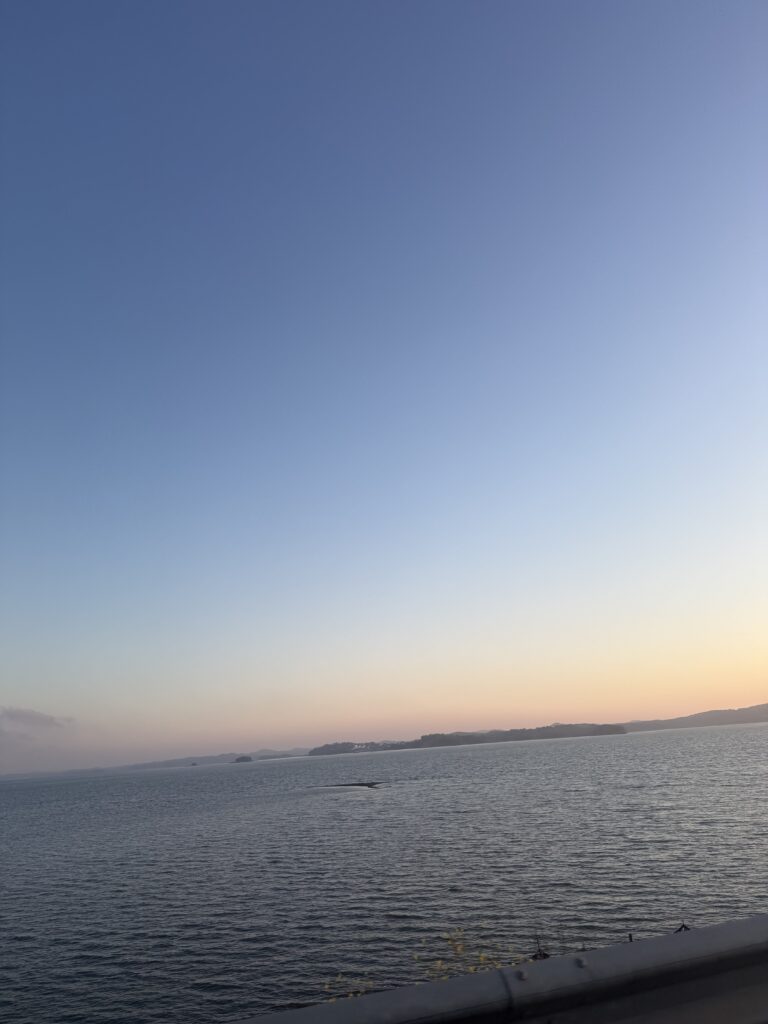
The 9-year-old woke up early into the drive and asked if we’d see “the sea” before going home. She’d been at the campsite all weekend. Inland, mountain views, no actual ocean. Anmyeondo is technically an island connected to the mainland by bridges, and we’d driven across causeways three times during the trip without ever stopping at a real beach. She was right. We owed her one beach stop.
I checked Naver Maps. Kkotji Beach was about half an hour south. Free parking. Free entry. Two hours total round trip plus stop. We could be home by dinner if we kept the beach stop to one hour. (The beach stop became two hours, of course. I should have known.)
Is Kkotji Beach Worth a Detour With Kids?
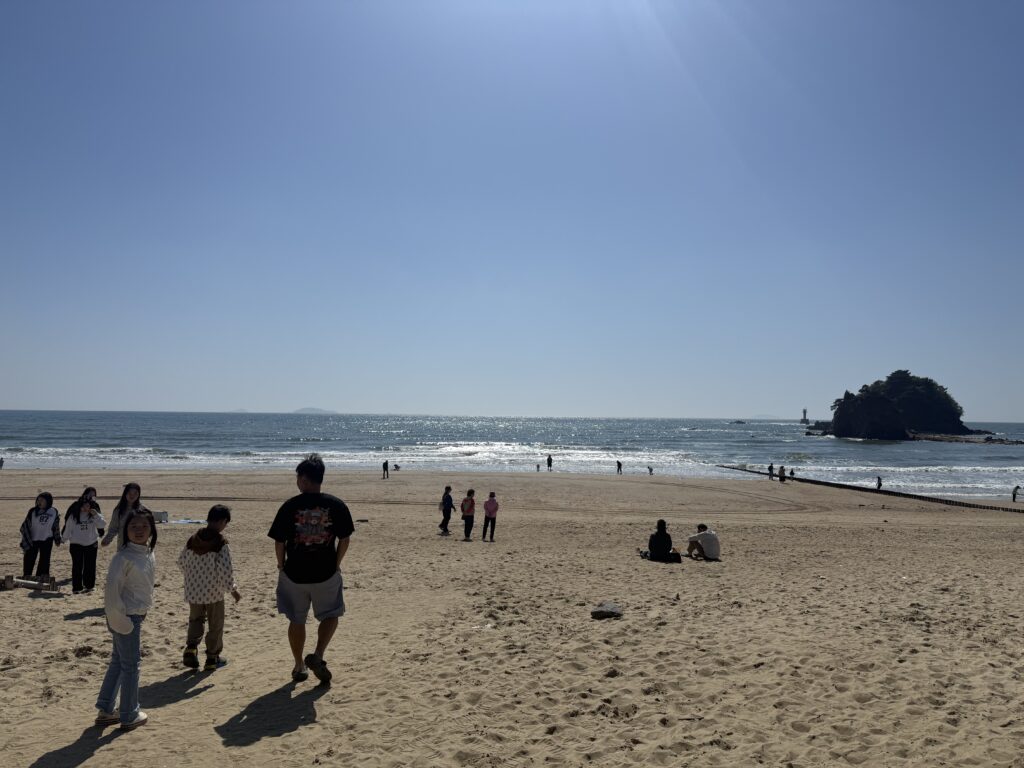
Yes, especially with grade-school-age kids. Kkotji Beach with kids is one of the most photographed family-friendly beaches on Korea’s western coast for a reason. Wide flat sand, gentle waves, two small islands sitting offshore that make the horizon line interesting, and enough room that even on a busy weekend you don’t feel crowded. With kids 5 to 12, the beach reads like a sandbox. They run, they collect, they dig, they sit. Parents don’t need to chase them around constantly.
The waves come in slow and even, breaking some distance out and arriving at the shore as a thin band of foam. Our 9-year-old daughter, who isn’t a strong swimmer and was wearing her usual jeans, could walk knee-deep into the water without getting swept. The 10-year-old went deeper but stayed where the waves only hit his thighs. Neither of them got knocked over. Compared to east-coast beaches like Gangneung, where waves can be aggressive even in calm weather, Kkotji is gentler for kids who haven’t done a lot of beach time.
Sand, Waves, and Why It Works for Younger Kids
Sand at Kkotji is soft, fine, and not too dark. Compared to some western-coast beaches that have brown muddy sand mixed with shells, Kkotji is closer to the lighter golden tone you’d expect from a tropical beach. The temperature in May was warm enough that bare feet worked fine, but cool enough that the kids didn’t burn their soles.
If you only have one beach stop on a Korea itinerary with kids, Kkotji is a safer pick than the more famous Haeundae in Busan or Gyeongpo in Gangneung. Less crowded. Calmer water. Easier parking. The downside is that there’s less around it, fewer cafes, fewer restaurants, but for a one-to-two hour stop, that’s actually a feature.
What’s the Tide Situation Like at Kkotji Beach?
Korea’s western coast has dramatic tides. The difference between high and low can be 6 to 8 meters at Kkotji Beach. That sounds extreme, and it is. At low tide the water can recede a few hundred meters from the high-water line, exposing wide muddy flats that locals walk across to gather shellfish. At high tide the water comes all the way up to the beach embankment.
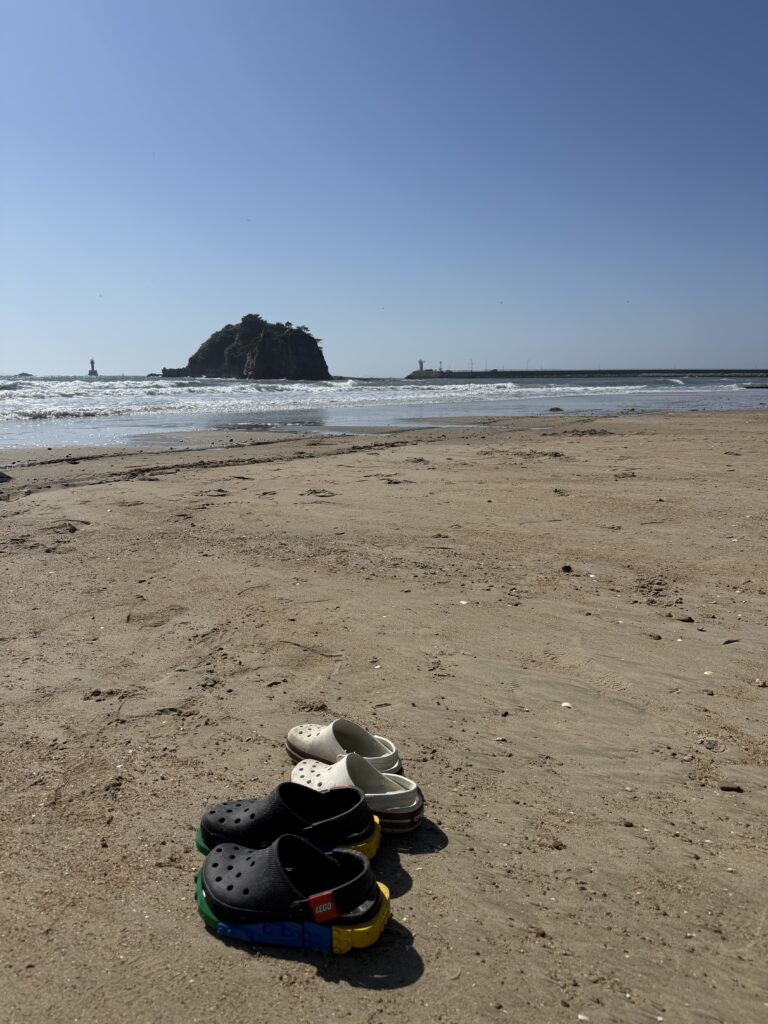
When we arrived around 2 p.m., the tide was rising. By the time we left at 4 p.m., the water had moved noticeably closer to where we’d left our shoes on the sand. Both kids noticed and got fascinated by it. The 9-year-old kept asking if the water would reach her sandals. (It didn’t, but it got close.) The 10-year-old built a small sand wall and kept extending it as the tide moved in. He stayed busy with that wall long enough to lose track of time.
For families planning a trip, check the Korean Hydrographic Office tide tables before you go. VisitKorea sometimes lists tide times for major beaches, but the tide tables (시간대별 조석표) on the official Korean tide site are more accurate. The general principle: if the tide is rising during your visit, kids stay safer because the water comes to them gradually. If the tide is falling, kids can wander out into mudflats too far before realizing the water is coming back. The rising tide window is the easier visit with kids.
How Long Should We Stay With Two Grade-Schoolers?
We had budgeted one hour. We stayed two. The two hours broke down roughly like this:
- The opening stretch: kids running into the water, getting their pants wet, coming back to the dry sand to dry off
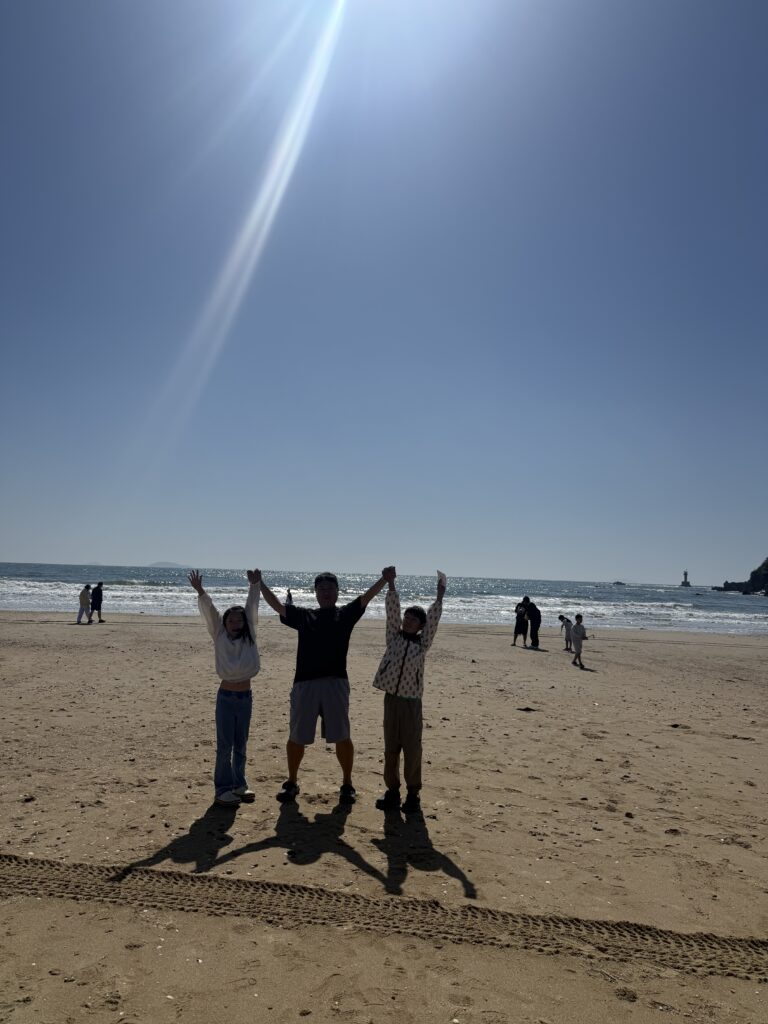
- The middle: shell collecting along the high-water line, plus jumping pictures and family silhouette photos with parents mostly sitting
- The closing stretch: more shell collecting and a slow walk along the embankment to look at the small offshore islands
For Kkotji Beach with kids, two hours is the sweet spot. Less than that and the kids feel rushed. More than that and the parents start drifting toward the parking lot in their heads. Pack snacks if you’ll stay over 90 minutes. The cafes near the beach are about a 5-minute walk away and aren’t always open in shoulder seasons.
What Did Our Kids Actually Do for Two Hours?
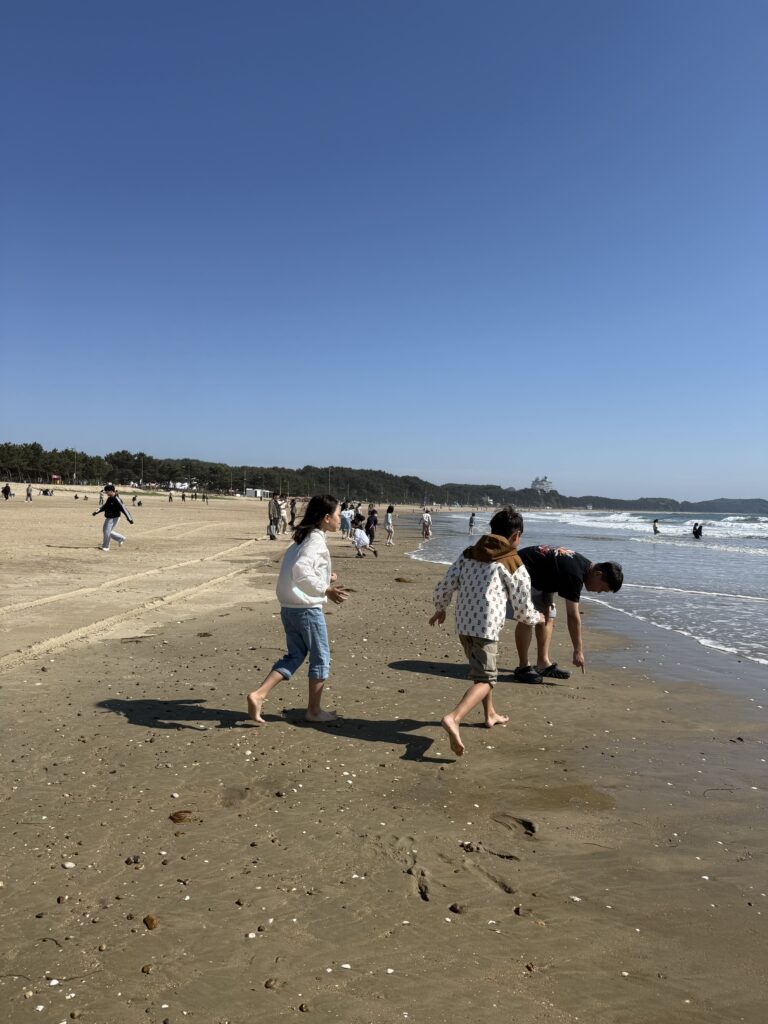
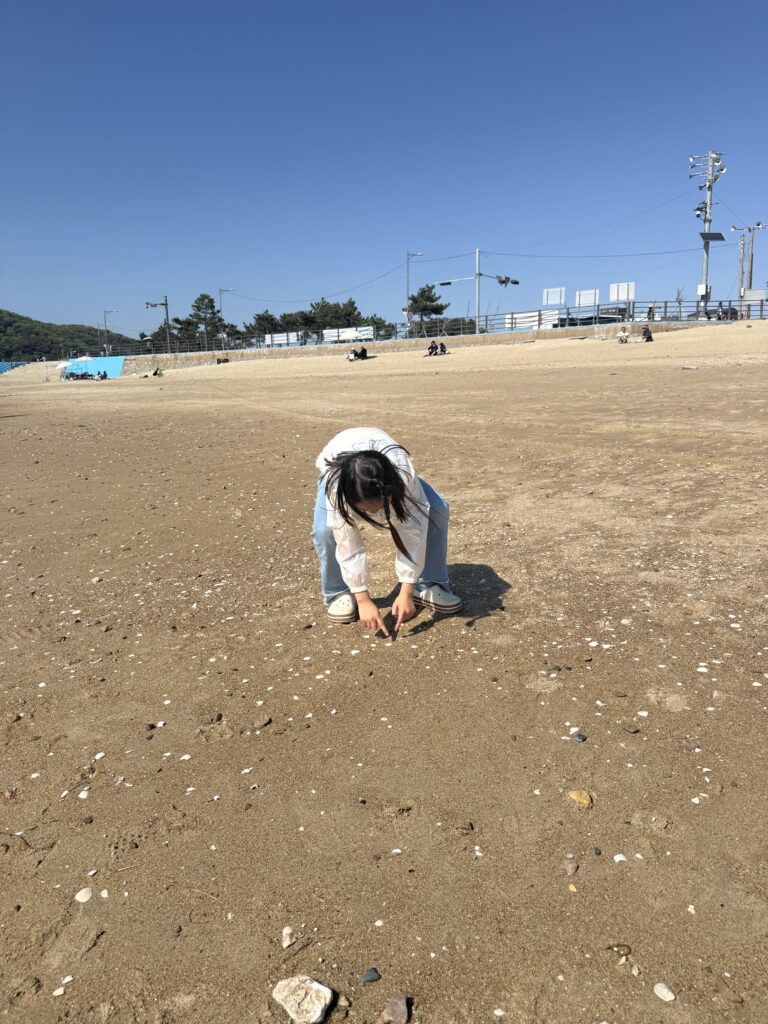
Our 9-year-old’s main activity was shell collecting. She’d find a shell, examine it, decide whether it was a “good one” (her criteria were unclear), and either keep it in her pocket or put it back. She built up a small handful of shells over the course of the visit. Most made it home in a bag. We’ve added them to the small shelf in our living room where her other beach finds live.
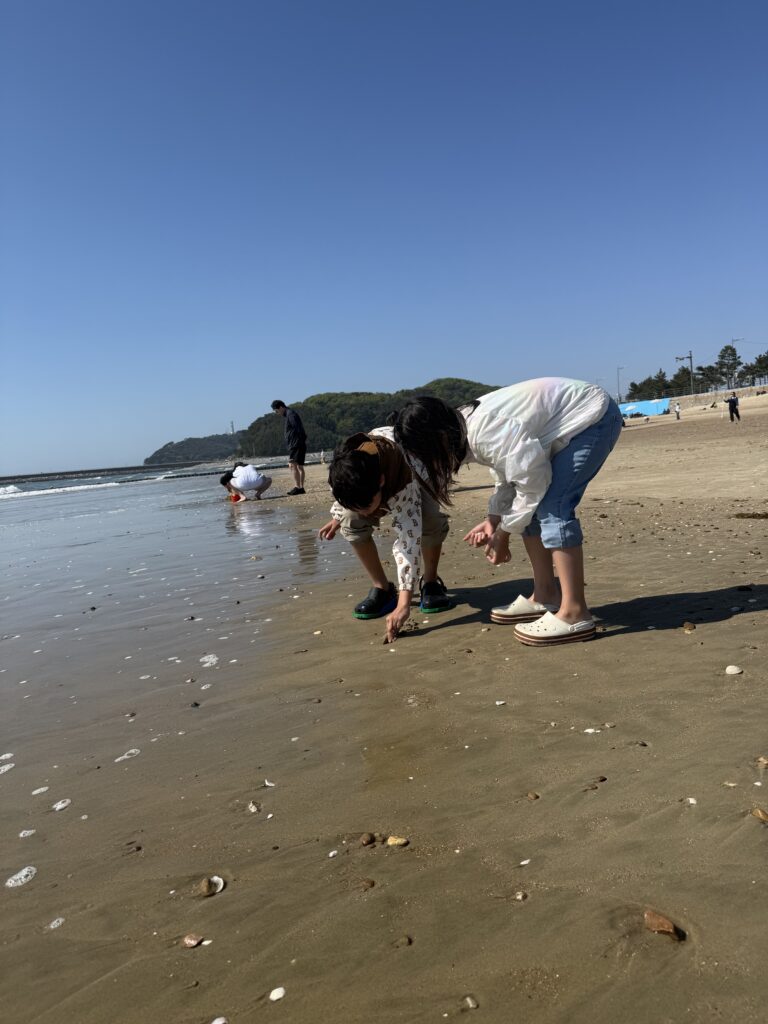
Our son’s main activity was jumping. He had decided that day was a Korean kids’ physical-education thing he had to practice. From a slightly elevated dune he jumped down to the lower sand. Then came the trail of seafoam left by retreating waves, which he hopped over again and again. Last he jumped his sister’s shadow when she stood with her back to the sun and her shadow stretched out long. The shadow-jumping became a multi-minute game between the two of them.
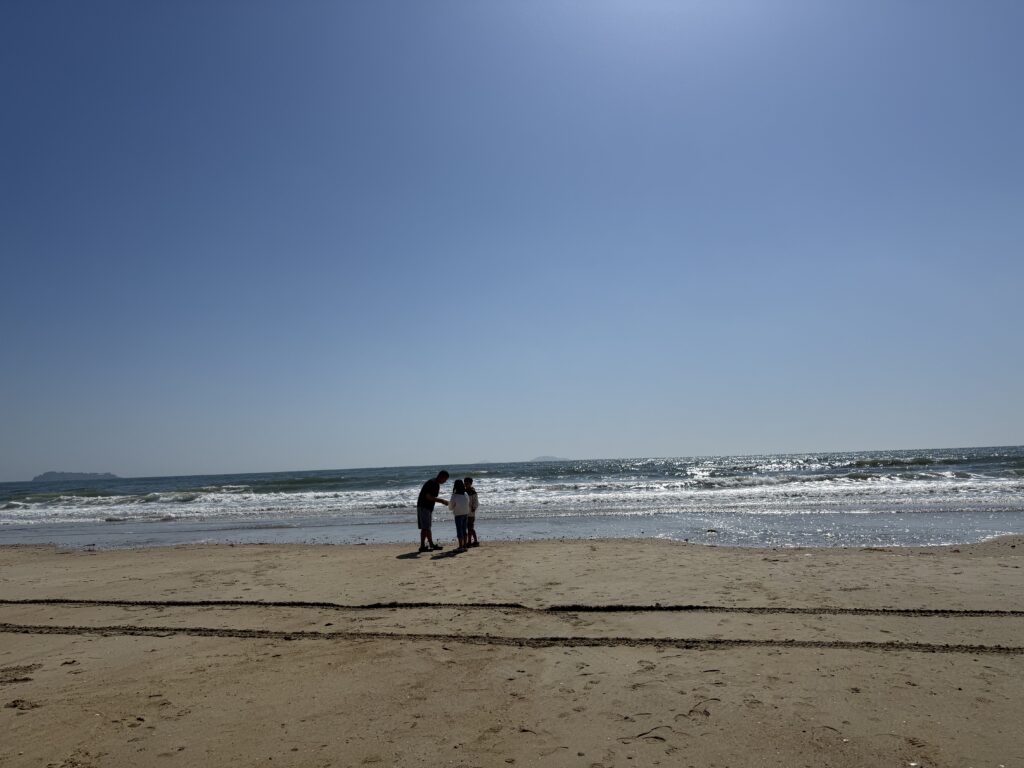
Just Sitting at the Edge of the Water
Both kids spent a chunk of time just sitting in the wet sand watching the waves. This activity doesn’t translate to photos, but it’s the actual reason we drive kids to the ocean. The 9-year-old sat for a stretch without doing anything visible. She stood up, brushed off, and said “I love the sea.” She went back to shell collecting.
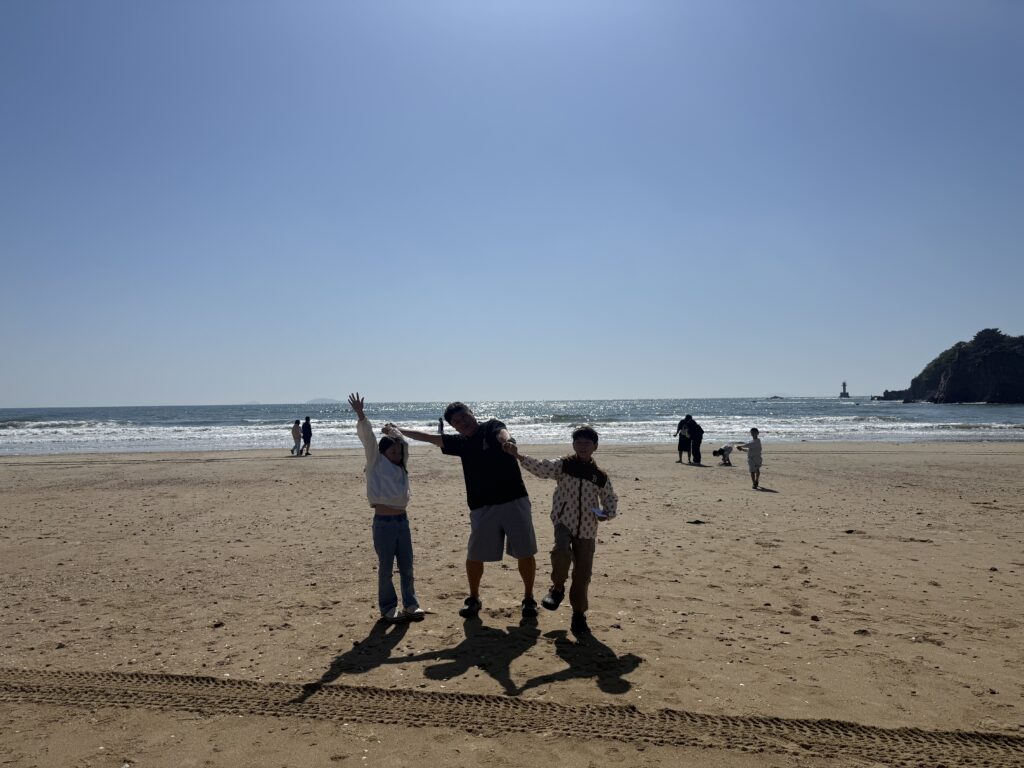
One thing visiting parents should know: don’t over-program a beach stop with kids. The unstructured time is the value. Bring buckets if you have them (we didn’t, and improvised with a plastic bag). Bring a small towel for sand removal. Other than that, just let the kids find their own rhythm.
Should We Time It for Late Afternoon or Sunset?
Late afternoon. Sunset is technically the iconic time for Kkotji Beach, since the two small islands offshore (one of them is the famous Halmi-Halbi or “Grandmother and Grandfather” rocks) line up nicely with the setting sun on certain dates of the year. Sunset photos at Kkotji are a Korean travel-blog cliche for good reason.
Why Late Afternoon Beats Sunset With Kids
For families with grade-school kids, sunset means kids who are tired, sand-cold, and ready to go home. The light is also lower, which makes shell collecting harder and the water look colder than it is. Late afternoon, roughly 2 to 4 p.m. in May, gives you the same wide horizon and soft golden light while the kids still have energy. You also avoid the late-evening parking-lot exit traffic.
If you’re driving from Seoul or Incheon and want sunset, plan to leave the beach right after the sun touches the horizon. The drive back to the highway is faster before full dark, and the parking lot empties quickly once the sky goes from orange to dark blue.
For us specifically, 2 to 4 p.m. was the right window. Light was warm but not low-angle. The kids were energized but not yet hungry. Tide timing was a rising tide. By the time we walked back to the car, the parking lot still had spots, the sun was high enough that I could see the road clearly, and we were on the highway not long after leaving the sand.
Are There Other Family Stops Near Kkotji Beach?
Yes, several. If you’re driving in from the camping side of Anmyeondo and only have an afternoon, Kkotji Beach can stand alone. If you’re making a longer day of it, a few stops nearby pair well with the beach for families.
The Anmyeondo Recreation Forest (안면도자연휴양림) is about 15 minutes north and has gentle walking trails through pine forest. The trails are stroller-friendly with effort, the air is clean, and the entry fee is minimal. We’ve been once before with the kids and the 9-year-old still talks about the wooden walkway through the trees. It pairs well with Kkotji as a “morning hike, afternoon beach” combo.
For another beach option, Mongsanpo (몽산포) is 20 minutes south of Kkotji. Less famous, longer flatter sand, even fewer crowds. Some families prefer Mongsanpo for younger kids because the wading depth stays shallow further out from the beach.
Pairing With a Meal Stop or Indoor Activity
For lunch or dinner, the cluster of clam-grill restaurants near Tando-gil includes Pungnyeon Hwesenta where we ate the day before. If you have time for both a meal and the beach in the same visit, the meal first then the beach works better than the reverse. Kids burn energy at the beach, and a sit-down meal afterward is harder than a sit-down meal before.
For a longer indoor activity option, the Taean International Horticultural Therapy Expo runs in nearby Taean and is a 15-minute drive from Kkotji. It’s seasonal, check current dates, but for families staying overnight in the area, it’s a reasonable rainy-day backup. We ended up visiting it ourselves on this trip after Kkotji, but that’s a separate post.
The drive from Kkotji to any of these stops is short and the roads are coastal, scenic, and not heavily trafficked outside of long-weekend peaks. Anmyeondo overall is more day-trip-stackable than Korean tourist guides usually suggest. With grade-school kids, two stops in a day is the sweet spot. Three is too many.
Beach Day Score Card
⭐ Overall: 4.7 / 5
- ⭐ Family Friendliness: 5 / 5, wide flat sand, gentle waves, room to run. The unstructured beach experience kids actually love.
- ⭐ Age Fit (9-10 yrs): 5 / 5, shell collecting, jumping shadows, wading. Both kids stayed engaged for two full hours.
- ⭐ Safety & Stroller Access: 4.5 / 5, calm waves, clear sight lines, paved entry. Stroller-friendly with some loose sand sections.
- ⭐ Value for Money: 5 / 5, free parking, free entry, free wash area. The free beach experience is hard to beat.
- ⭐ Cleanliness: 4 / 5, sand was clean. Wash area was clean. The bathrooms were acceptable but not pristine.
- ⭐ Atmosphere: 5 / 5, wide open coast, two small offshore islands on the horizon, golden afternoon light. A place that makes you slow down.
Quick Reference for the Drive
- 🌊 Tide: Western coast tides are dramatic, 6 to 8 meter range. Check Korean Hydrographic Office tide tables before going. The rising tide window is safer with kids than the falling one
- 🕒 Best time to visit with kids: 2–4 p.m. in May for late-afternoon golden light without the sunset chaos
- 👟 What worked for us: Crocs or rubber sandals, sunscreen, a windbreaker, small towel, and a bag for shells. Avoid leggings, since sand sticks to leggings forever
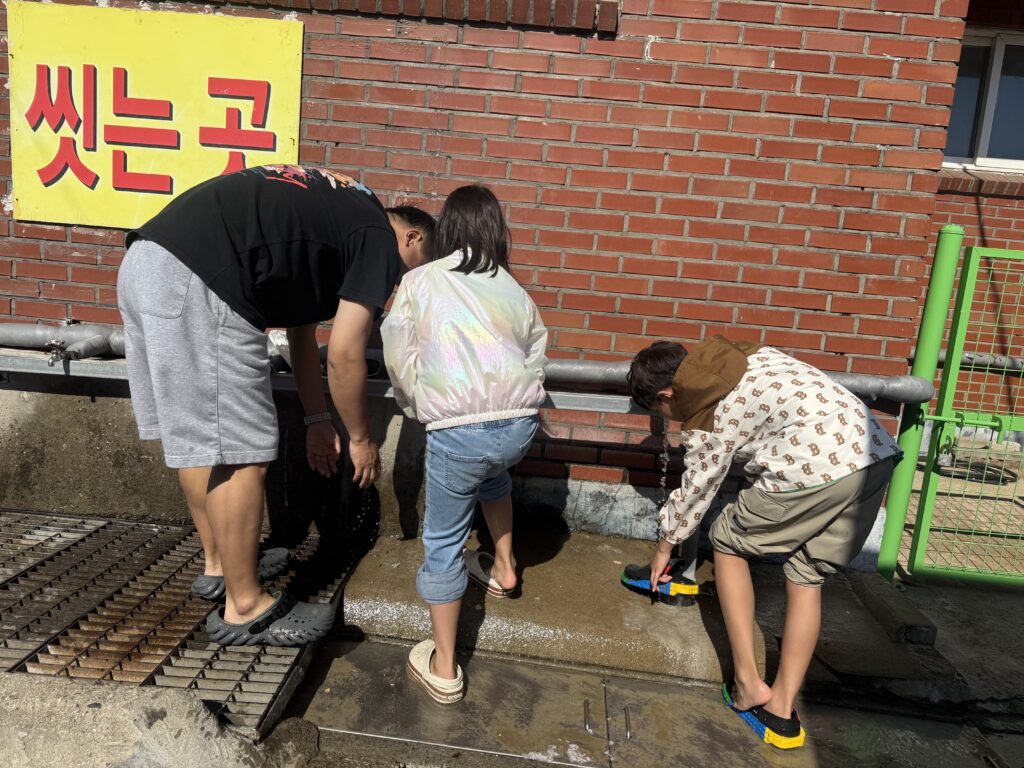
- 🚿 Wash area: Free outdoor cold-water tap, marked with yellow Korean signs (씻는 곳)
- 🚻 Bathrooms: Free, ~50 meters inland from beach entrance. Clean enough for a quick stop
- 🍴 Food: A few cafes and snack spots within 5-minute walk. Limited in shoulder seasons. Bring snacks for a 2-hour stop
- 👶 Stroller access: Possible from parking to wash area. Loose sand sections require pushing harder
- 💰 Entry: Free
- 🅿️ Parking: Free, large lot just inland from the beach. Fills up on summer weekends but had plenty of space in early May
- 🚗 From Seoul: ~2.5 hours via Seohaean Expressway (without traffic). From Anmyeondo lunch spots like Pungnyeon Hwesenta: ~25 minutes south
- 📍 Address: 충남 태안군 안면읍 (Anmyeon-eup, Taean-gun, Chungcheongnam-do)
- 🗺️ View on Google Maps
By 4 p.m. the kids had collected a small jarful of shells between them, jumped each other’s shadows for a long stretch, and walked a slow loop around the beach embankment. We rinsed feet at the wash area. The kids put their Crocs back on while still half-wet because they couldn’t be bothered to dry properly. Sand fell out of every pocket and crease as we walked back to the car.
The drive home took two and a half hours including a coffee stop. The shells are still in a small jar on the 9-year-old’s shelf. The 10-year-old still does the shadow jump in our hallway when he’s bored. That’s the residue of two hours at a beach we’d never been to before, and it’s enough to make us pair Kkotji with the same campsite trip again.