This stop was our older son’s pick, and he had been set on it for weeks. He wanted the “museum that comes alive,” the illusion place he had seen online, so we booked a visit to the Jeju trick art museum known locally as Baksal 2. What we found was fun, chaotic, and not quite the version he had in his head.
Our ten-year-old does the research in this family, and he’d set his heart on the original show. What he actually got sits indoors in southern Jeju, charges a paid admission with family tickets available, and suits kids of roughly five to twelve, plus any adult who doesn’t mind holding a camera for hours. This is the honest account of the day, the good and the genuinely exhausting, so you can decide if it fits your family.
I want to be upfront, because a lot of write-ups gloss over the downsides of these photo museums. They can be brilliant fun, and they can also leave a parent frazzled and a kid overstimulated if you go in blind. We had both experiences in one afternoon, so I will tell you exactly how it went and how to make it land on the fun side.
What the Jeju Trick Art Museum Actually Is
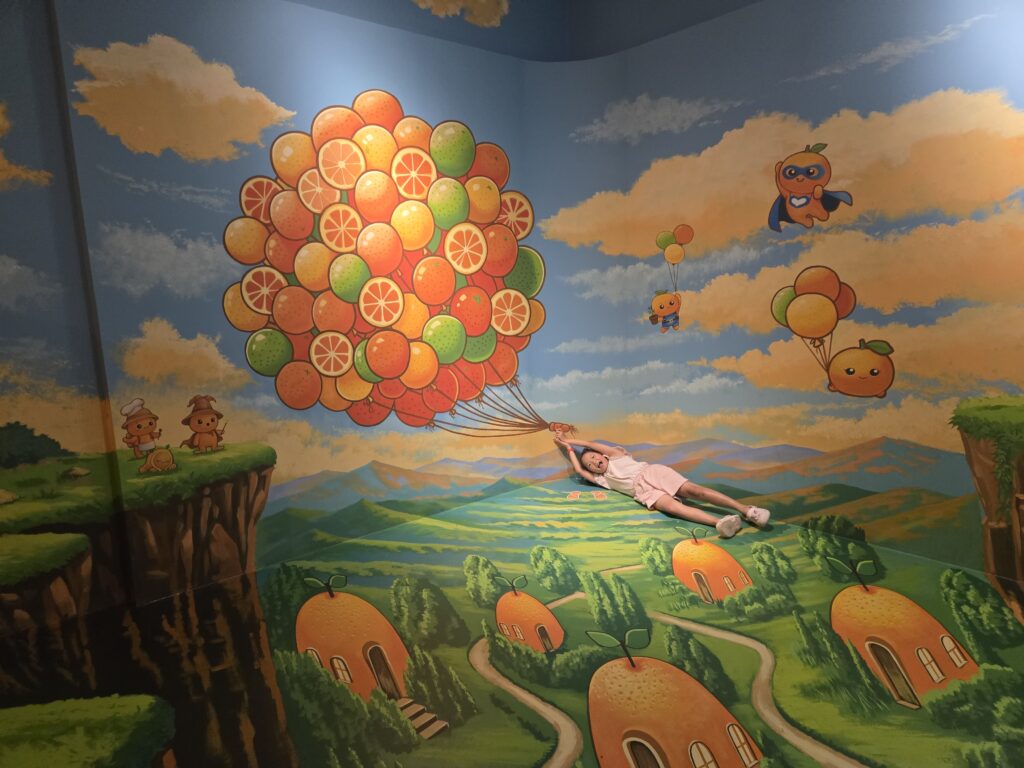
A trick art museum is a series of painted rooms designed to fool the camera. You stand, sit, or lie in front of a mural, and through the lens it looks like you are falling, flying, or trapped in a giant fish tank. The whole point is the photo, not the wall itself.
This particular Jeju trick art museum leans hard into island themes. Tangerines, Jeju rock, the sea, and local mascots show up in scene after scene. So the photos come home looking distinctly like Jeju, which is a nice touch and better than a generic version of the same idea.
If you have never done one of these, the appeal is simple. Kids get to be inside a cartoon for an afternoon. They can hang off a cliff, ride a giant tangerine, or float in the sky, all without leaving a warm, dry room. For a rainy Jeju day, or a break from the sun, it is an easy win with children who love hamming it up for the camera.
It also sits indoors, which matters more than you would think on a two-week trip. We had beach days and hikes lined up, all weather-dependent. Having an indoor option in the back pocket is smart planning. When the forecast turned, a photo museum became the obvious call.
These trick-art museums have popped up all over Korea, and the concept travels well with kids. The idea came out of a style of painting that plays with perspective, so a flat wall reads as three dimensions through a camera. Stand in the wrong spot and it looks like a mural. Stand on the marked spot, and suddenly you are dangling off a cliff. Kids find that magic trick endlessly funny.
The Season One Letdown
Here is the first honest note. Our son wanted the original “museum is alive” experience, but that season had ended. The place had been renovated and relaunched as a new version, Baksal 2, with a fresh set of rooms.
It is a good museum. But if your child is expecting something specific they saw in an old video, manage that ahead of time. Ours needed a minute to accept it was not the exact place from his research. Once he did, he was fine, though the small disappointment was real, and I would rather you avoid it. Check what is currently running before you go.
This is a common trap with kid-chosen destinations. They find a clip online, build it up in their heads, then reality does not quite match. The rooms change, seasons end, attractions get made over. A quick look at recent photos or the current site can save a sulk at the door. We now do that check for anything the kids are set on, a lesson this visit taught us the hard way.
To the new version’s credit, it is clearly a fresh, well-kept fit-out. The paint is crisp, the rooms are clean, and it does not have the tired feel some older photo museums pick up over time. So while it was not the show our son had pictured, it was arguably in better shape for being new. Once he stopped comparing it to the old clips and just started posing, the disappointment evaporated fast.
Room After Room of Photo Ops
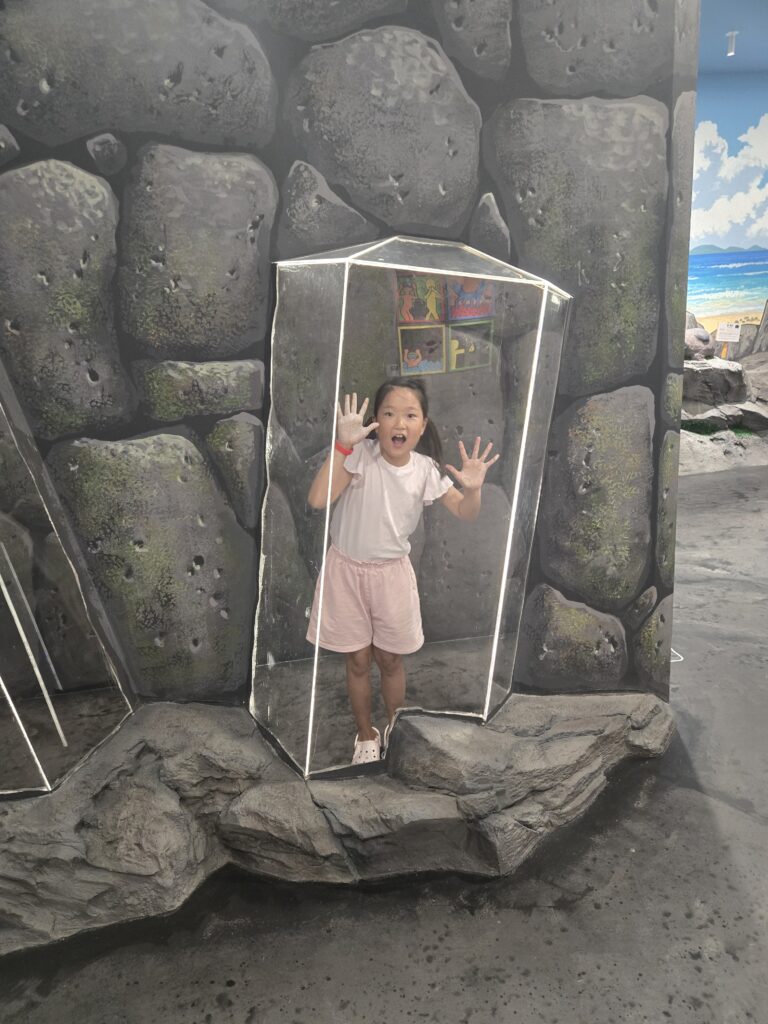
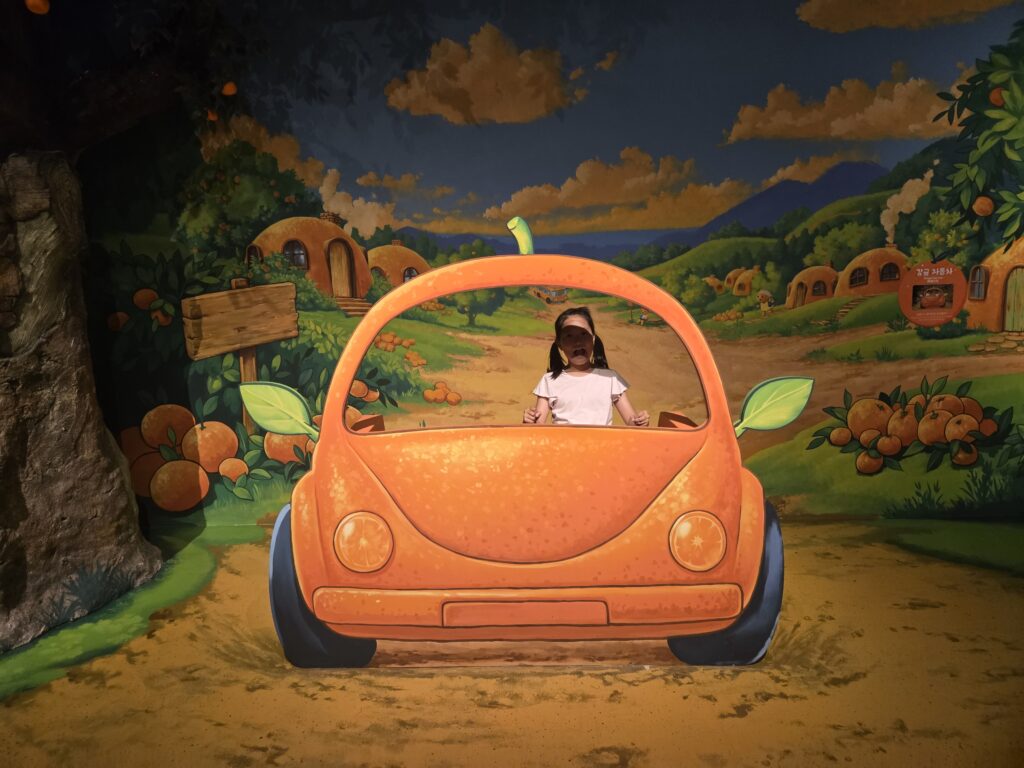
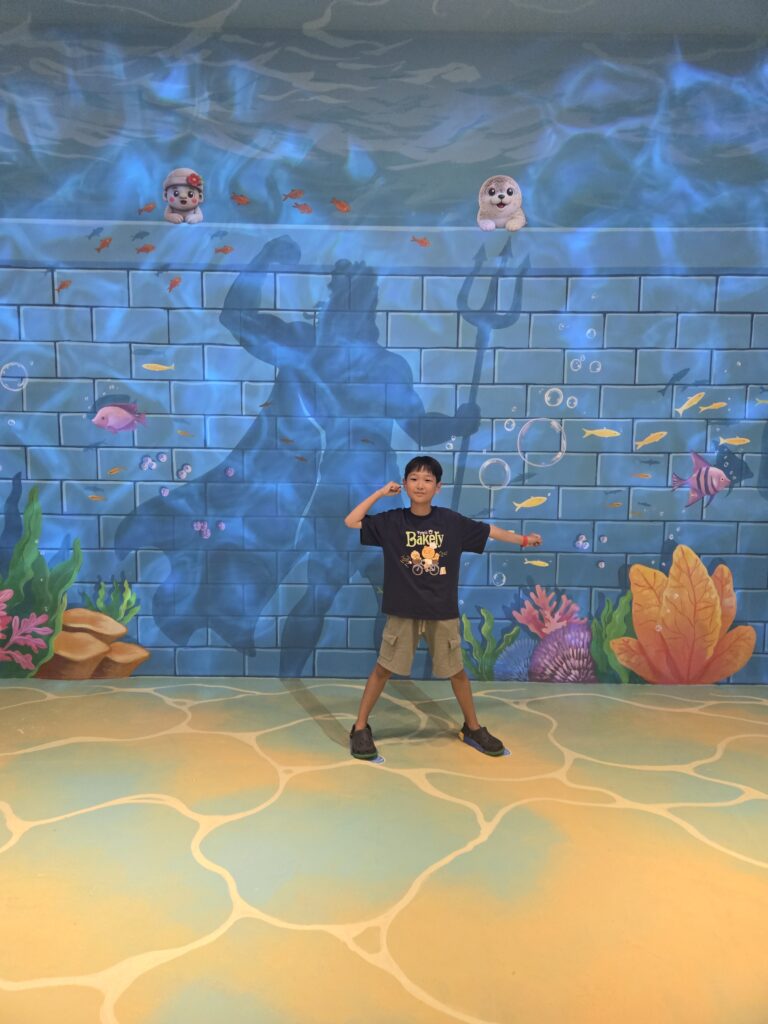
The core of the visit is a long chain of illusion rooms, and there are a lot of them. A waterfall you appear to climb, pop-art frames you pop out of, a tangerine car you seem to drive. Each one has a marked spot on the floor showing exactly where to stand for the effect.
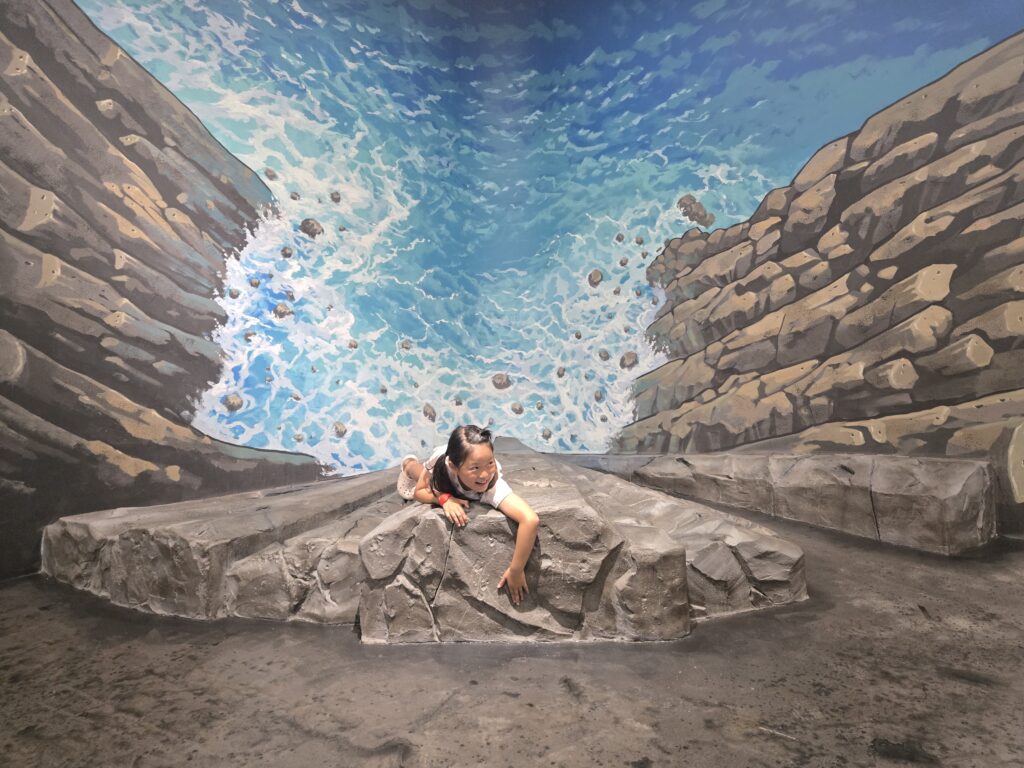
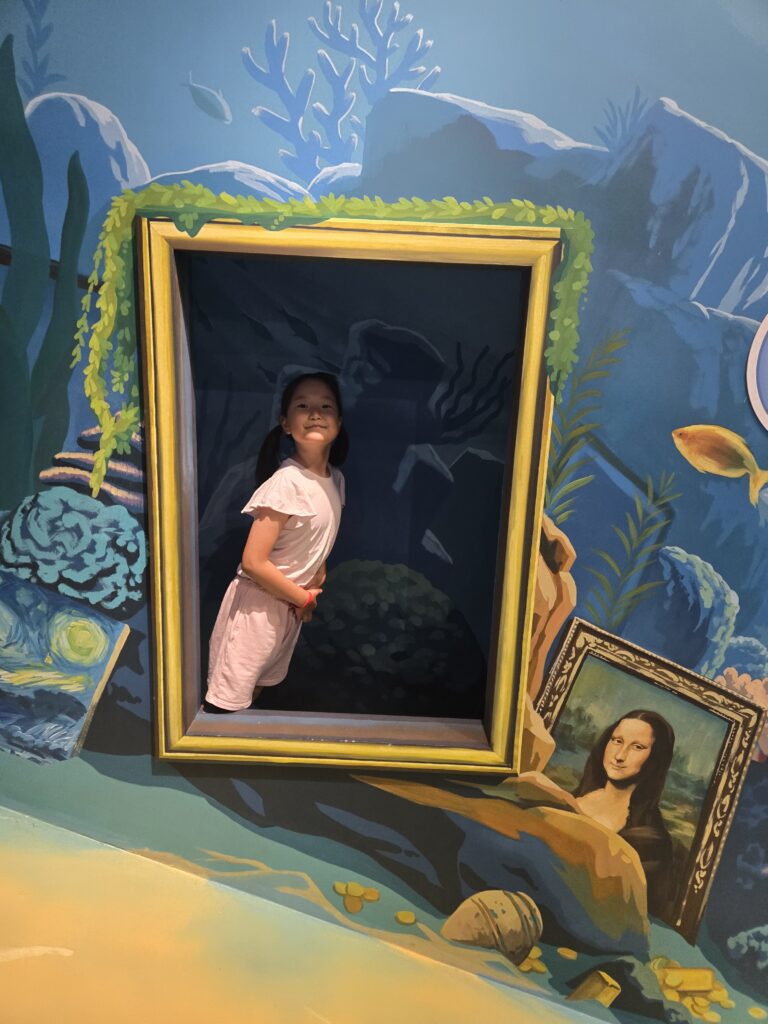
Some of the illusions are genuinely clever. The underwater rooms, the giant picture frames, the cloud-filled sky boxes all photographed beautifully. Our daughter threw herself into every pose, and half of these shots are now family favorites.
The trick is committing to the pose. A half-hearted stance ruins the effect, so the more dramatic the kids went, the better the photo. Ours quickly learned to sell it, arms flung out, faces horrified, leaning into the illusion. Watching them ham it up was as fun as the finished pictures, and it loosened up even the shy poses.
The quality of the painting varies, to be fair. A few rooms are stunning, with real depth that fools you even standing there in person. Others are simpler, more of a quick background than a full illusion. But there are so many rooms that the hits far outnumber the misses, and the kids did not care about the difference anyway.
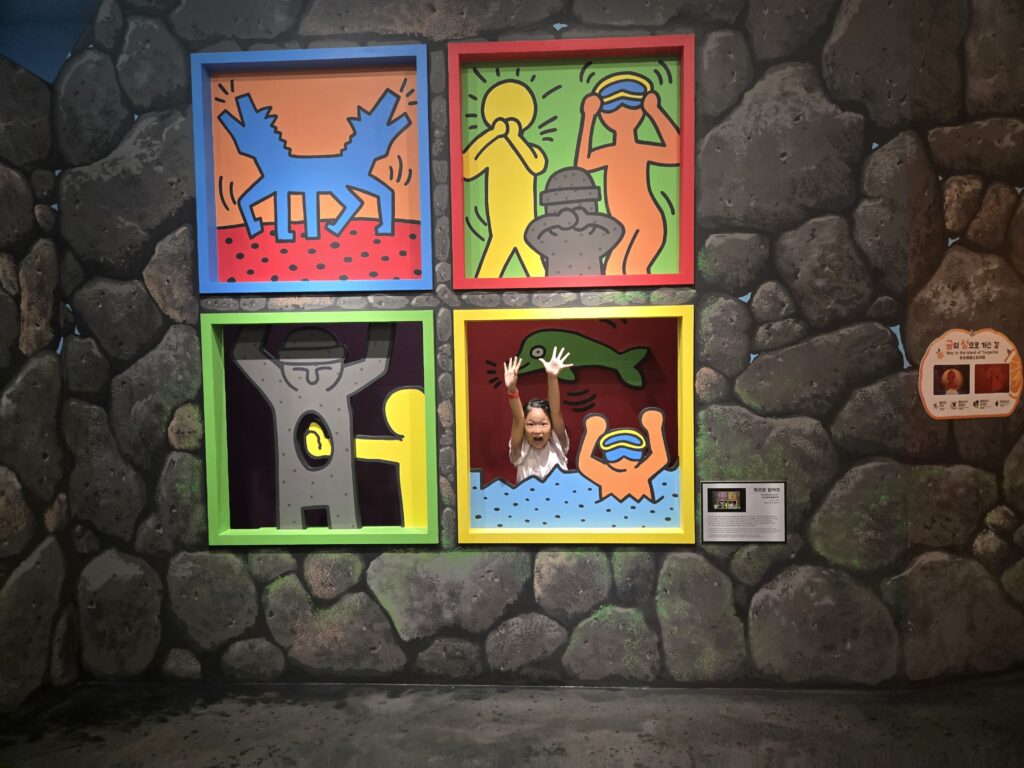
The Jeju-Themed Rooms Were the Standouts
Scenes tied to the island stuck with us the most. A tangerine hot-air balloon, an orange-shaped car, mascots peeking from behind Jeju rock. They gave the photos a sense of place that a generic illusion museum never could. You look back at the shots and know instantly they were taken on Jeju, which for a trip album is exactly what you want.
The kids latched onto the tangerine theme too, since they had been eating the local oranges all week. Seeing them turned into balloons and cars felt like an inside joke by that point in the trip. Little touches like that lift a place from generic fun to something that fits the holiday around it.
So Many Rooms It Never Got Stale
The variety of rooms kept things fresh far longer than I expected. Just as one theme started to feel repetitive, the next room switched it up entirely. Underwater one moment, up in the clouds the next, then a pop-art frame, then a giant everyday object. That constant change is what carried the kids through a place that is, when you strip it back, just a series of painted walls.
There is a loose route through it all, room leading to room, so you are not wandering aimlessly. That structure helps with kids, since there is always a clear next thing to head toward. You are never stuck deciding where to go, which keeps the momentum up and the whining down.
Do not rush the first few rooms, though. It took ours a little while to warm up and understand the game. Once they clicked with how the illusions worked, the poses got bolder and the photos got better. Give them a room or two to find their feet, and the rest of the visit flows much more easily.
Some rooms are clearly built for a specific gag, and the best ones are genuinely clever. A frame where you appear to be swimming inside a painting. A box that makes one kid look tiny and the other huge. The kids figured out several of the tricks themselves, then coached us on how to pose, which they loved being in charge of.
The Part Nobody Warns You About
Now the honest downside. Taking these photos is work, and a lot of it. Every room needs someone to crouch at the exact angle, line up the shot, and coach the kid into the right pose. With two children wanting turns in every scene, I spent the whole visit as a full-time photographer, and it was tiring.
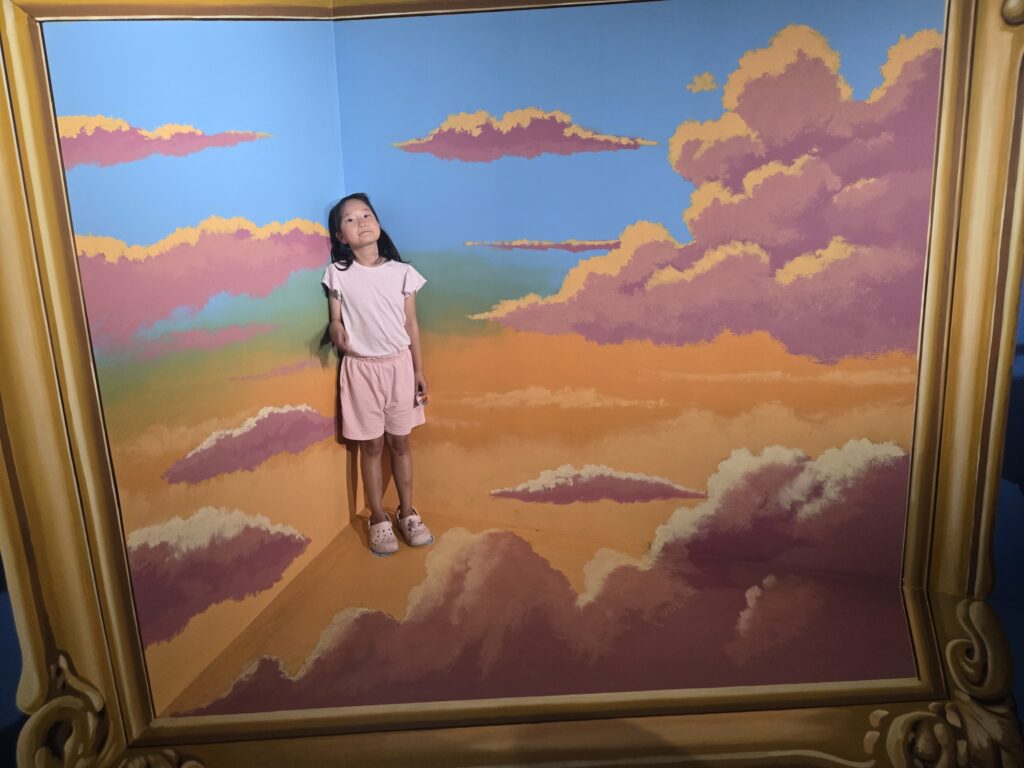
I will be blunt. It was fun, but it was hectic. There is little time to just relax, because the whole place runs on constant posing and snapping. If you go in expecting a calm museum wander, you will be surprised. Go in expecting an energetic, camera-in-hand marathon, and you will enjoy it more.
The other thing is the queue for each spot. On a busy day, every good room has people waiting for their turn at the mark. With our two both wanting a shot, plus other families, some scenes meant a short wait, then a rushed pose so as not to hold up the line. It is nobody fault, just the nature of a place where the whole appeal is one perfect angle per room.
How to Keep It Fun, Not Frantic
My honest advice is to go easy on yourself. You do not need a photo in every single room. Pick the ones your kids love, nail those, and breeze past the rest. We learned that halfway through, and the second half was far more relaxed than the first.
It also helps to hand the camera around. Once I stopped being the sole photographer and let the kids shoot each other, the pressure eased. Their photos were wonky and half the heads were cut off, but they were having a blast, and I got to actually be in a few shots myself. Perfection is not the point here, and letting go of it made the whole thing more fun.
When the Older One Loosened Up
My favorite stretch was watching our ten-year-old drop his cool. He started the day a little deflated about the season change, arms crossed, too old for silly poses. By the giant flying-book room, he was leaping into shots with both feet.
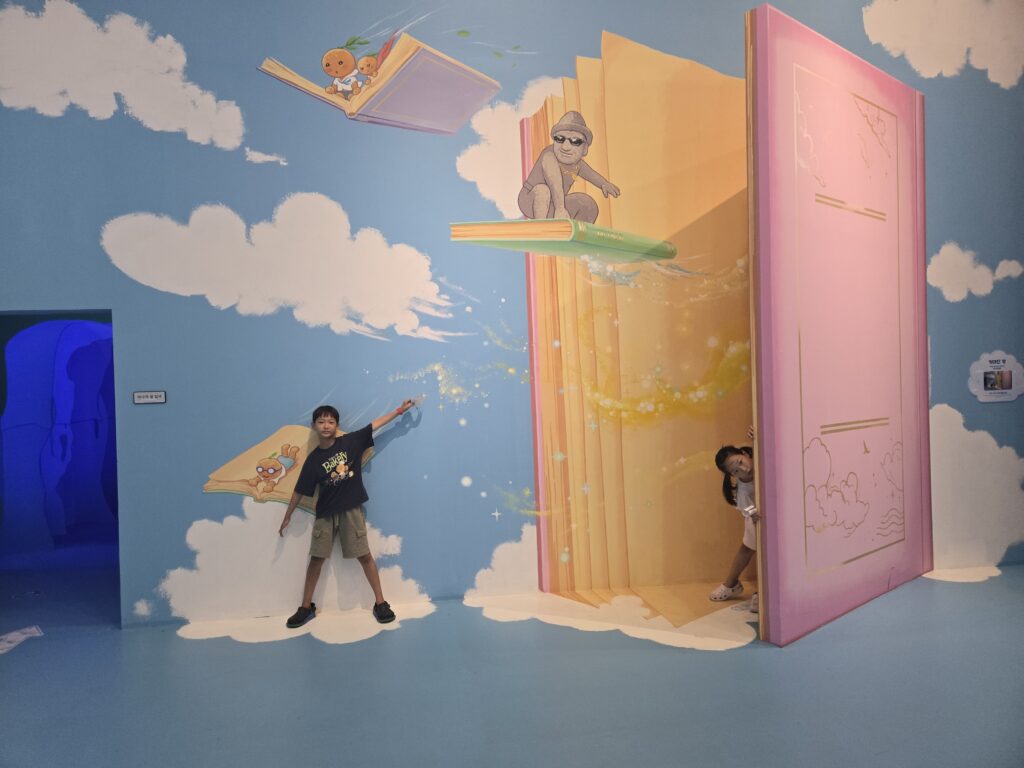
That shift is why I would still recommend the place. A kid who thinks he is too grown for this stuff ends up grinning in a picture frame. Both of ours got fully swept up by the end, and the sulk from the entrance was a distant memory.
It reminded me that the character of a place matters less than the mood you build inside it. He came in wanting one specific thing and not getting it. He left having invented a dozen new poses of his own. Sometimes the best part of a family day is watching a kid decide, on their own, to have fun after all.
Our nine-year-old, meanwhile, never needed convincing. She threw herself at every room from the first, striking dramatic poses and demanding I capture each one. She has no self-consciousness yet, which makes her the perfect subject for a place like this. Watching the two of them, one warming up slowly and one all-in from the start, was half the fun of the visit.
By the midpoint, they had started collaborating. One would spot the trick of a room, the other would jump into position, and they would direct each other on angles. It turned into a team activity rather than two kids taking turns. That cooperation, rare enough at home, was a nice surprise, and it made the photographer’s job a little easier too.
The Interactive Rooms Saved the Energy
Near the end, the museum switches gears from static photos to interactive play, and this was the highlight for the kids. One room has a projection floor that reacts to their steps, lighting up with color as they stomp and run.
There is also a target game where they fling or dodge at a lit-up wall, chasing a score. After hours of holding poses, letting them just move and play was exactly what everyone needed. These rooms turned a photo museum into an actual playground for the last stretch.
Honestly, if the whole museum had a bit more of this, it would be near perfect for kids. The static photo rooms are fun but demand a lot from the parent behind the camera. The interactive rooms ask nothing of me and everything of the kids, which is the right way round at the end of a long day.
Games That Stole the End
The projection floor was the clear winner. Step on it and colors burst under your feet, ripples spread, shapes scatter. The kids stomped and spun and chased the light for a solid stretch, laughing the whole time. It is pure, simple fun, the kind that needs no explaining and no posing, and it was the happiest I saw them all afternoon.
The target game got the older one in particular. There is a score, a challenge, a reason to try again, and that hooked his competitive streak. He must have played half a dozen rounds, determined to beat his own number. Give a ten-year-old a scoreboard and you can hold his attention almost indefinitely, and this did exactly that.
A Happy, Frantic Finish
Both kids melted down into pure joy here, chasing lights and each other across the floor. For a few minutes I got to just stand back and watch, camera down, and enjoy it. That break, right at the end, sent us out on a high rather than a frazzle.
If you can, save these interactive rooms for when the kids start to flag on the photo rooms. They land best as a reward and a release after all the careful posing. End on the movement and the play, and everyone leaves buzzing instead of tired, which is a much better note to walk out on.
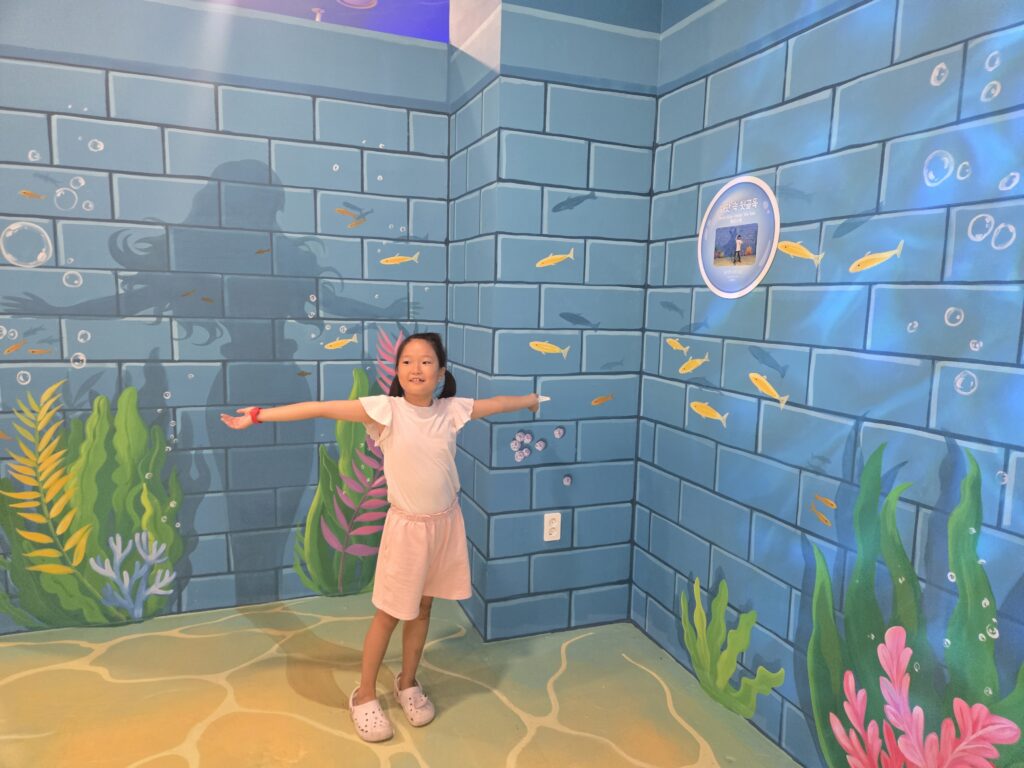
By this point in the visit, the kids had found their groove. They knew how the rooms worked, struck poses without coaching, and even directed each other. Watching a nine-year-old boss her big brother into the right spot was worth the price of admission alone. The last stretch flew by, all momentum and laughter, and we left buzzing rather than drained, which is not how the middle of the day felt.
A Calmer Option and an Outdoor One
For another Jeju attraction the kids adored, our day at Snoopy Garden Jeju is a calmer, more spread-out alternative if the photo marathon here sounds intense. And to balance the indoor time, our Seongsan Ilchulbong stair guide gets everyone back outside.
Survival Notes for the Designated Photographer
A few things that would have made our visit smoother.
- 📸 Bring a charged phone: you will take hundreds of photos, no exaggeration
- 🤳 Learn the angles: each room has a floor mark, so shoot from there
- 👥 Take turns calmly: two kids in every room means a queue, so pace it
- 🔎 Check the current season: the rooms change, so confirm what is running now
- 🔋 Save energy for the end: the interactive rooms are the real payoff
- 🕒 Allow a couple of hours: more if your kids love posing
Our Take, in the End
Honestly, yes, but with a plan. Fewer photos, more of the interactive rooms, and a clear head about which season is running. If you want a number, I land on 3.8 out of 5: great fun, docked a little for the chaos. A trick art museum is a fun idea, and this is a well-themed take on it.
A word on how long to budget. We spent a couple of hours, and that felt about right for two kids who wanted every room. You could move faster if you are selective, or slower if your kids are obsessive posers like ours. It is not an all-day attraction, so pair it with something else nearby to fill out the day.
Value-wise, it sits in the middle. It is not cheap for what is essentially a photo studio, but the number of rooms and the interactive finale stretch the ticket. The photos you come away with are the real souvenir, and we took hundreds. If your family loves capturing the trip in pictures, that alone can justify the entry.
Who It’s For
So who is this for? Families with camera-happy kids, on a rainy day, with a parent willing to play photographer for a couple of hours. If that is you, the Jeju trick art museum is a genuinely fun stop, especially for the themed rooms and the interactive finale. If your kids are not into posing, or you want a calm wander, this may wear you out more than it delights you.
Looking back through the photos that evening was its own little joy. The kids crowded around the phone, reliving each room, laughing at the silly poses. For all my grumbling about the effort, those pictures are some of the most fun from the whole trip. A place that gives you that much to laugh about later has earned its keep, hectic afternoon and all.
Our son, the same kid who walked in deflated, asked in the car if we could come back next trip. I’m counting that as a win, even if my thumbs quietly voted for a longer break between visits.