After a morning of clear, cold water at Jangho Port, the kids wanted the opposite. They wanted waves. Real ones, the kind you can jump into and get knocked over by. Jangho is a sheltered cove, calm and glassy. Lovely for snorkeling, but flat. So we got back in the car and drove five minutes up the coast. Most people seem to drive straight past this stretch of sand. Munam Beach Samcheok turned out to be the quiet surprise of the whole day.
We almost didn’t go. It was already past lunch. Everyone was salty and a little tired. The easy move would have been to start the long drive home. The kids overruled us.
- 📍 Location: Munam Beach, Samcheok, Gangwon Province (about 5 minutes north of Jangho Port)
- 🏷️ Category: Family Travel & Activities
- 💰 Price: Free; open beach with on-site cooking allowed
- 🎯 Best Age Range: 5–13 (waves suit confident kids; clam-digging suits everyone)
The Beach We Almost Didn’t Bother Finding
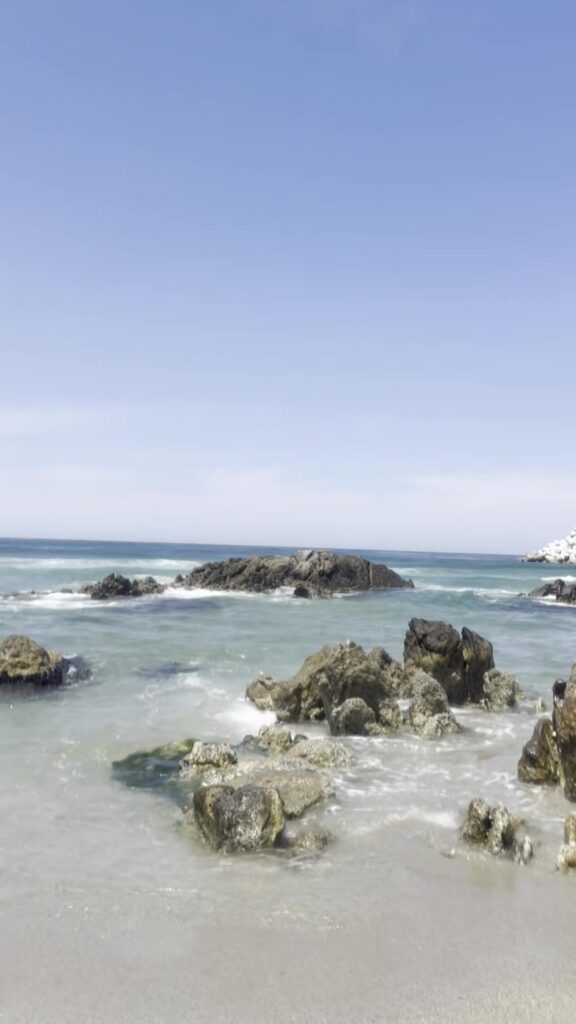
Munam Beach Samcheok doesn’t announce itself. There’s no big arch. There’s no row of cafes lit up to pull you in. You turn off the coast road, park near the sand, and walk down. The beach just opens in front of you, and the sea is already loud. The Jangho experience zone had felt managed, with its rope lines and ticket booth. Here the emptiness was almost startling.
What sold the kids in the first minute was the sound. Jangho had been quiet water lapping at your shins. Munam was waves cracking against rock. They rolled up the sand in long sheets. Our daughter was down at the waterline before I’d locked the car.
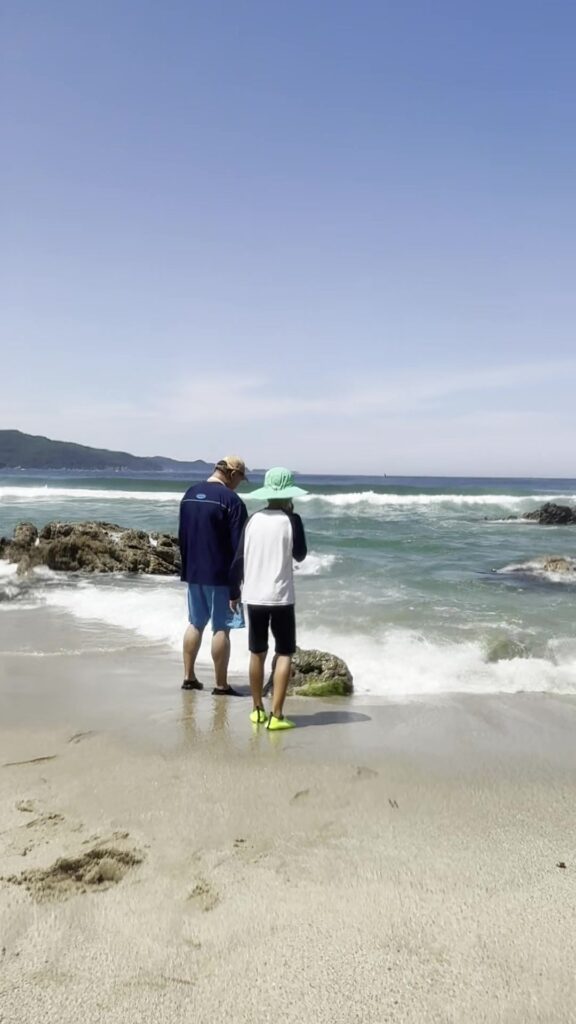
We’d come to Samcheok with a loose list. Munam wasn’t even firmly on it. It earned its place by being exactly the thing the kids were missing after a calm morning. And it was close enough that the detour cost us nothing. A few minutes’ drive bought us a completely different beach.
Real Waves After a Calm Cove
The contrast with Jangho is the whole point of pairing the two. The cove had been a place to peer at fish. Munam was a place to get tumbled. The waves weren’t dangerous-big, but they had real push. Our two waded out to where the swell lifted them. Then they let it shove them back toward the sand. Both kept their water shoes on, since the dark rocks along the shore are slick and edged.
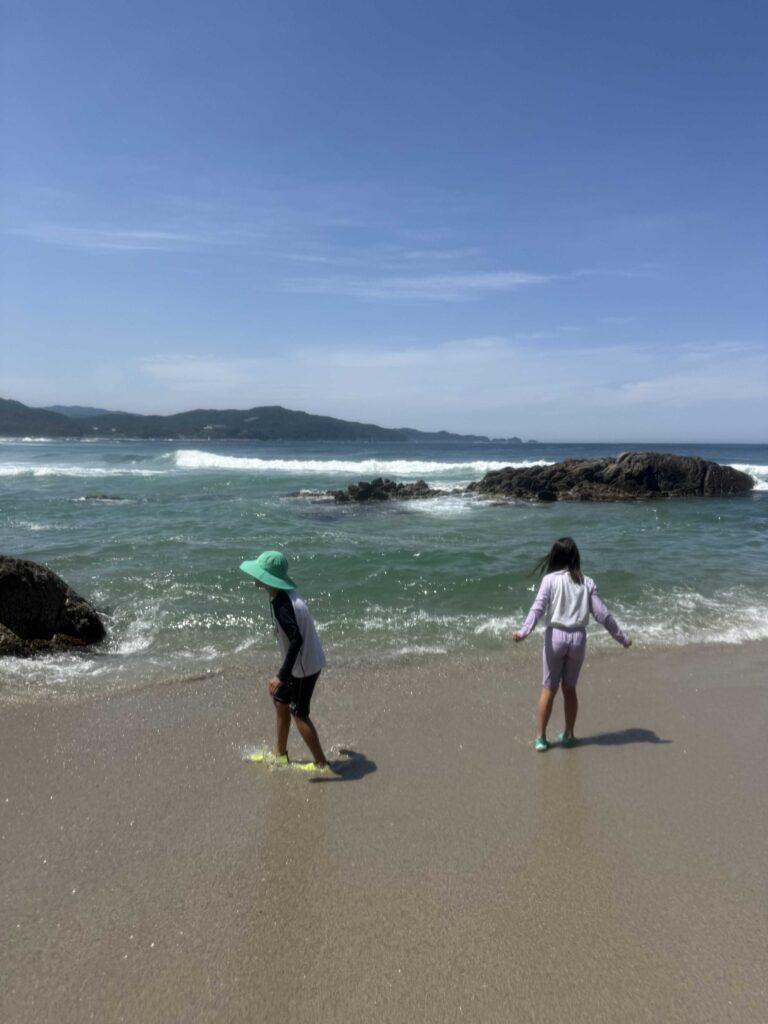
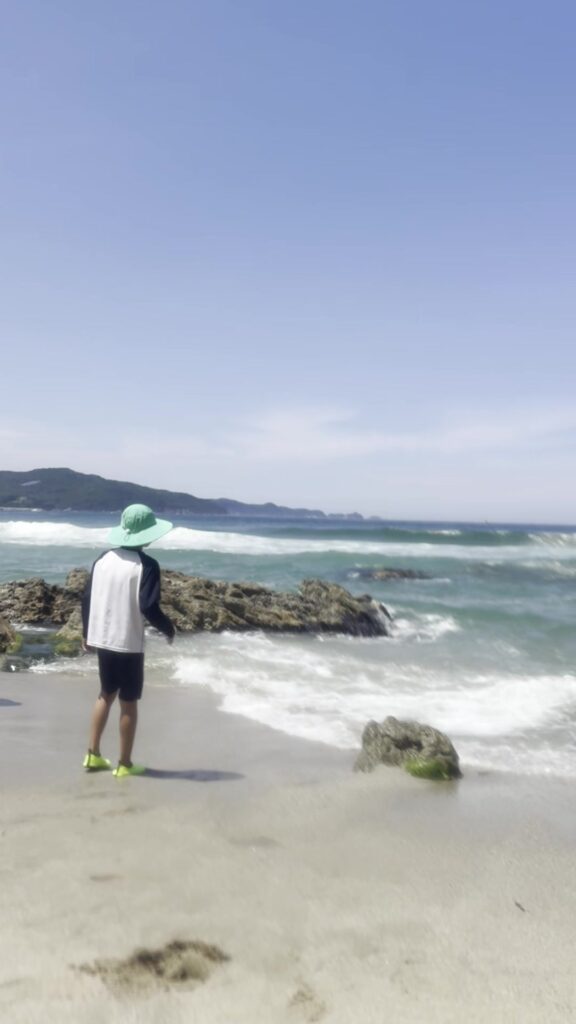
That kind of water did something for our daughter in particular. She has a careful streak most days. She’s the one who tests the temperature before committing to anything. Here she went straight in. And she laughed every time a wave took her feet out from under her. By the end she was daring her brother to go deeper.
Keeping Kids Safe in Open Surf
I’ll add the obvious parent note. Open-sea waves mean you stay closer than you do at a roped cove. There’s no swim zone marked off here. There are no rental vests waiting at a booth. So we kept the kids in shin-to-knee water for the rough stuff. And we watched the sets roll in. With grade-schoolers who can already handle a bit of surf, that’s an easy enough call.
With toddlers, I’d treat Munam as a paddling-and-digging beach. The shore drops in places, and the backwash has some pull. So this is a watch-them-the-whole-time beach. We’d brought our own life jackets from a previous trip. We put them on the kids for the deeper play. I’d recommend that if you have them, since there’s nothing to rent on site.
Digging Clams in Clean Water
The thing that turned a wave stop into a two-hour stay was the clams. The wet sand at Munam is full of them. You dig with your fingers where the water pulls back. Small shells come up, ridged and striped. Some are still clamped shut. Our two filled a palm, dumped them, and filled it again. The water is clean enough to watch small fish dart in the shallows between waves. That kept the hunting interesting.
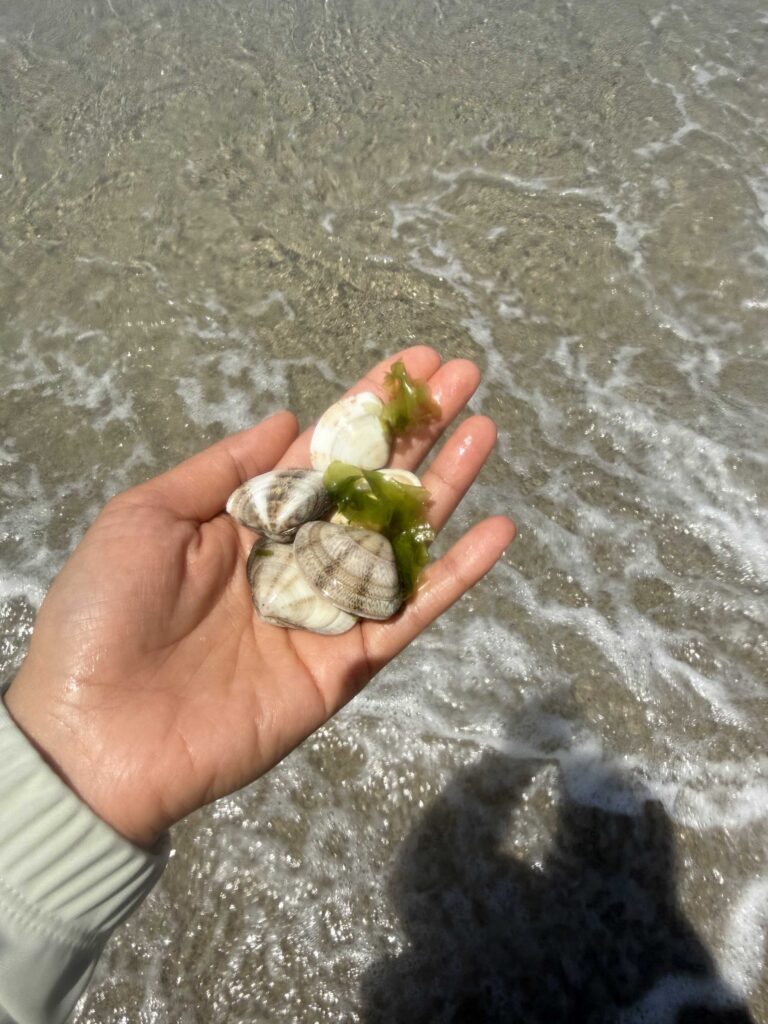
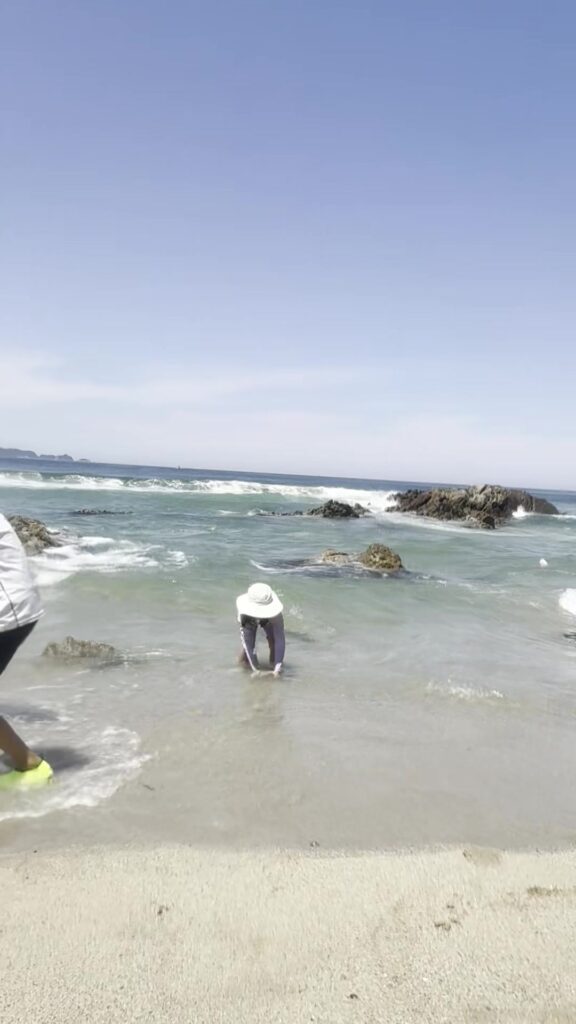
Here’s where my own kid surprised me. Our son is usually the loud one. He’s the first to get bored and start narrating his boredom. At Munam he went quiet. He dug for the better part of an hour, sorting his clams by size on a flat rock, completely absorbed. I sat on the sand and didn’t say a word. I didn’t want to break whatever spell the place had put on him.
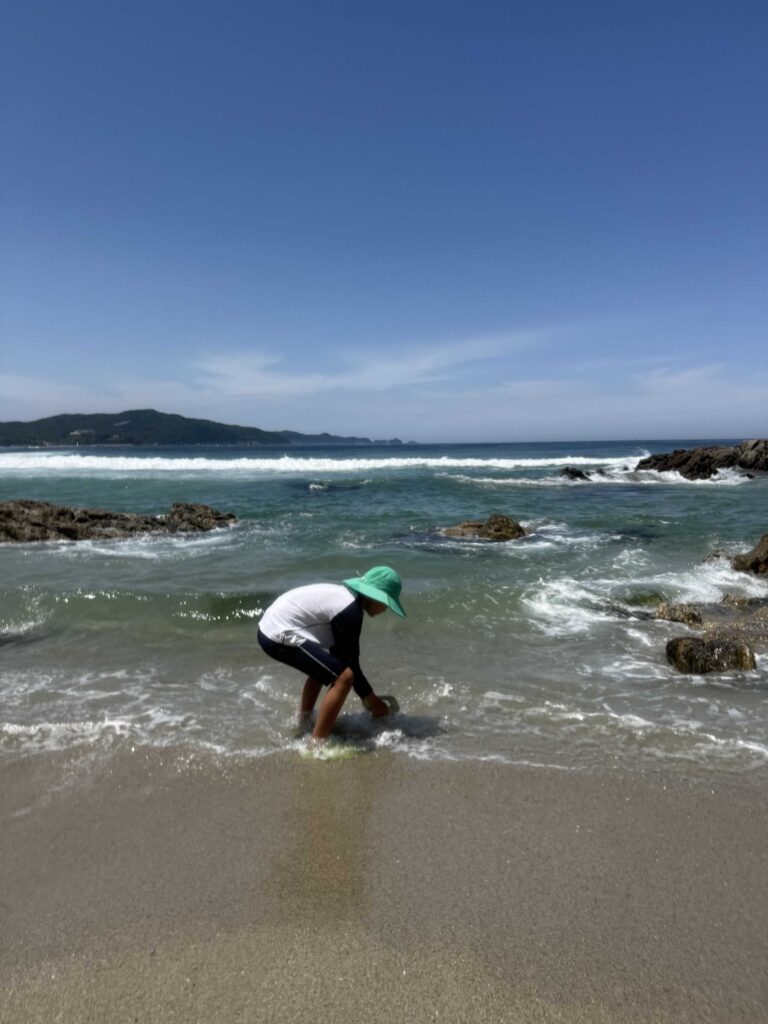
Clam-digging is the great equalizer on a family beach. It needs no skill, no gear, no confidence in the water. So the careful kid and the wild kid both end up crouched in the same patch of wet sand. For a long stretch at Munam Beach Samcheok, that’s exactly what ours did. Side by side, and quiet.
Whether You Can Take Them Home
We put everything back before we left. The point for us was the digging, not a bucket of dinner. We also weren’t sure about the local rules on collecting. Shellfish areas in Korea can be regulated. Some are leased to local fishing cooperatives. Others close in certain seasons. The rules aren’t always posted in English.
So check the signage at the beach and the season first. When in doubt, treat it as catch-and-release the way we did. The digging is the fun part anyway. And a child who releases a clam back into the sand tends to feel rather good about it.
You Can Actually Cook on This Beach
One thing sets Munam apart from a lot of Korean beaches. Cooking is allowed on the sand. We saw a couple of groups set up to grill. The smell of samgyeopsal (thick-cut pork belly, the go-to Korean barbecue) drifted down the beach around mid-afternoon. People bring portable burners. They cook ramen or barbecue right where they’re sitting. That’s banned at many managed beaches near Seoul.
We kept it simple and didn’t cook this time. We’d already eaten at Jangho, and we had a long drive ahead. But knowing it’s an option changes how you’d plan a day here. Bring a burner, a pot, and a pack of pork. Munam could be a slow half-day where the meal is part of the fun, not a thing you leave the beach to find.
If you do bring a burner, the unwritten rule is the obvious one. Pack out everything, including grease and ash. Don’t pour anything into the sand. Munam still feels clean because the people using it keep it that way. A beach that allows cooking only stays that way while visitors respect it.
What to Bring to a Wild Beach
Munam Beach Samcheok has almost nothing on site. That’s part of its charm and part of its challenge. There’s no shop renting parasols, no row of vendors, no equipment counter. Whatever you want for the afternoon, you carry in. We were glad we still had the towels, sunscreen, water, and snacks left over from the morning at Jangho.
The non-negotiables for kids here are water shoes and drinking water. The dark rocks are sharp. There’s no easy place to buy a cold drink once you’re on the sand. A small shade tent helps if you plan to stay, since the natural shade is thin. Bring a bag for wet clothes too. The kids will get soaked whether you planned for swimming or not.
Set expectations with younger children about bathrooms before you arrive. Facilities are minimal compared with a developed beach. We made a stop before leaving the Jangho area, which saved us a scramble later. A little planning turns Munam from a place with nothing into a place with everything you actually need.
Why It Still Feels Private
The best thing about Munam is also the thing that makes it hard to sell in a guidebook. Almost nobody’s there. We shared a wide beach with a handful of other groups on an early-June afternoon. They were spread far enough apart that the kids could run without bumping into anyone. No vendors calling. No packed parking. Nobody fighting for a patch of sand.
I suspect that changes in peak August, when the whole east coast fills. For a shoulder-season day, though, the emptiness is the draw. It’s the kind of beach where you can hear your own kids over the sea. That sounds like a small thing. It isn’t, once you’ve spent a summer at the crowded west-coast spots near home.
There’s a trade-off to all that quiet, and it’s worth naming. The lack of crowds comes with a lack of services. If your idea of a beach day includes a rented umbrella and a snack bar within reach, Munam will feel bare. We came to it straight from the fully-serviced cove at Jangho. The swing from one to the other was a big part of why the day felt complete.
East Coast Munam vs a West-Coast Beach
We usually swim on the west coast, since it’s closer to Hanam. The difference at Munam was obvious within minutes. West-coast beaches near Seoul tend to be flat and wide, with shallow water and dramatic tides. Munam Beach Samcheok is the opposite kind of beach. The water is clearer. The waves have real shape. Sand gives way to dark rock at the edges.
Each suits a different day. A west-coast beach is the easy, close, low-stakes option for a Saturday. Munam asks for a long drive and a bit more caution in the water. But it pays you back with clarity, quiet, and the freedom to cook on the sand. For a family willing to make the trip, that’s a fair trade.
What’s Nearby If You Need Supplies
Munam itself has next to nothing. So plan your supply run before you hit the sand. The closest easy stop is back toward Jangho Port, five minutes south. That little harbour area has the snack shops, cup ramen, and the experience-zone vendors we’d seen that morning. If you forgot drinks or want a hot snack, that’s the nearest fix.
For a proper shop, you’re looking at the wider Samcheok area. Stock up on the drive in, not after you arrive. We’d loaded a cooler bag with water, fruit, and bread before leaving Jangho. That meant we never had to break the afternoon to go hunting for food. With kids, that’s the difference between a smooth stay and a cranky one.
The parking is the informal kind. You pull off near the sand and find a spot among the other cars. It was easy on an early-June afternoon. On a peak-summer weekend, come early or expect a short walk from wherever you end up. There’s no big paved lot here, which is part of why the beach stays quiet.
Best Season and Tides at Munam
We went in early June, which felt like the sweet spot. The water was cold but bearable for wading. The crowds hadn’t arrived yet. July and August bring warmer water and far more people, even on this quiet stretch. Spring and autumn are quieter still. But the sea is then too cold for much beyond clam-digging and paddling.
Tides matter here, as on any clam beach. The digging is best as the water pulls back, when fresh wet sand opens up. Check a Korean tide table for Samcheok before you go. A falling tide in late morning gives you the easiest window with kids. We lucked into one without planning it, and it made the clamming far better.
Common Questions From Visiting Families
Is Munam Beach Samcheok good for young children? Yes, for the sand and the clams. The open waves make it less ideal for toddlers in the water. Keep little ones to ankle depth and let them dig.
Is there an entrance fee? No. The beach is free and open, with no ticket booth and no gate.
Can we really cook on the beach? Yes. Portable burners and grilling are allowed on the sand, which is rare near Seoul. Just pack out all your waste.
Are there bathrooms and showers? Facilities are minimal. Plan a stop before you arrive, and bring water to rinse sandy feet.
How does it compare to Jangho Port? Jangho is a calm, clear cove for snorkeling. Munam has real waves and clams. The two pair well as a morning-and-afternoon combo.
What should kids wear? Water shoes are the key item, since the rocks are sharp. A rash guard helps against sun and scrapes. Bring a full change of dry clothes too, because they will get soaked.
If You Want to Find Munam Beach
Munam Beach Samcheok sits about five minutes north of Jangho Port. So the natural way to do it is exactly how we did. Make it the second stop after a Jangho morning. From Seoul you’re looking at roughly three hours of driving to reach this stretch of the Samcheok coast. Most of it is expressway. Parking is informal and near the sand. On a non-peak day you’ll find a spot without trouble. There’s no entry fee and no ticket booth, because there’s nothing here to ticket. It’s just a beach.
Bring what you’d bring to any wild beach, since there’s little on site. Water shoes for the dark rocks. A towel each. Sunscreen, drinking water, and snacks if you’re not planning to cook. A small shovel, or just bare hands, for the clams. If you want to grill, pack a portable burner and your own food. Then carry every bit of rubbish back out with you.
A Last Word on Safety
One safety note is worth repeating. These are open-sea waves with no lifeguard and no roped zone. So this is a watch-your-kids beach, not a let-them-roam one. We treated the rough water as knee-deep territory. We saved the deeper play for the calm cove at Jangho earlier in the day. You can find general regional info on the Korea Tourism Organization site. The Samcheok page on Wikipedia gives a quick sense of the area.
If you’re building a Samcheok day, this beach pairs best with the clear-water snorkeling at Jangho Port just down the road. We finished ours on the Chogok Yonggul candlestick-rock boardwalk before driving home. For a calmer, warmer beach closer to Seoul on another weekend, our Kkotji Beach stop on Anmyeondo covers the west-coast version of a family beach day.
We left as the light started to soften, clam-free hands and all. Our son asked, halfway up the sand, whether the clams he’d put back would find their way home. I told him they would. Some days that’s the right answer, whether it’s true or not.